
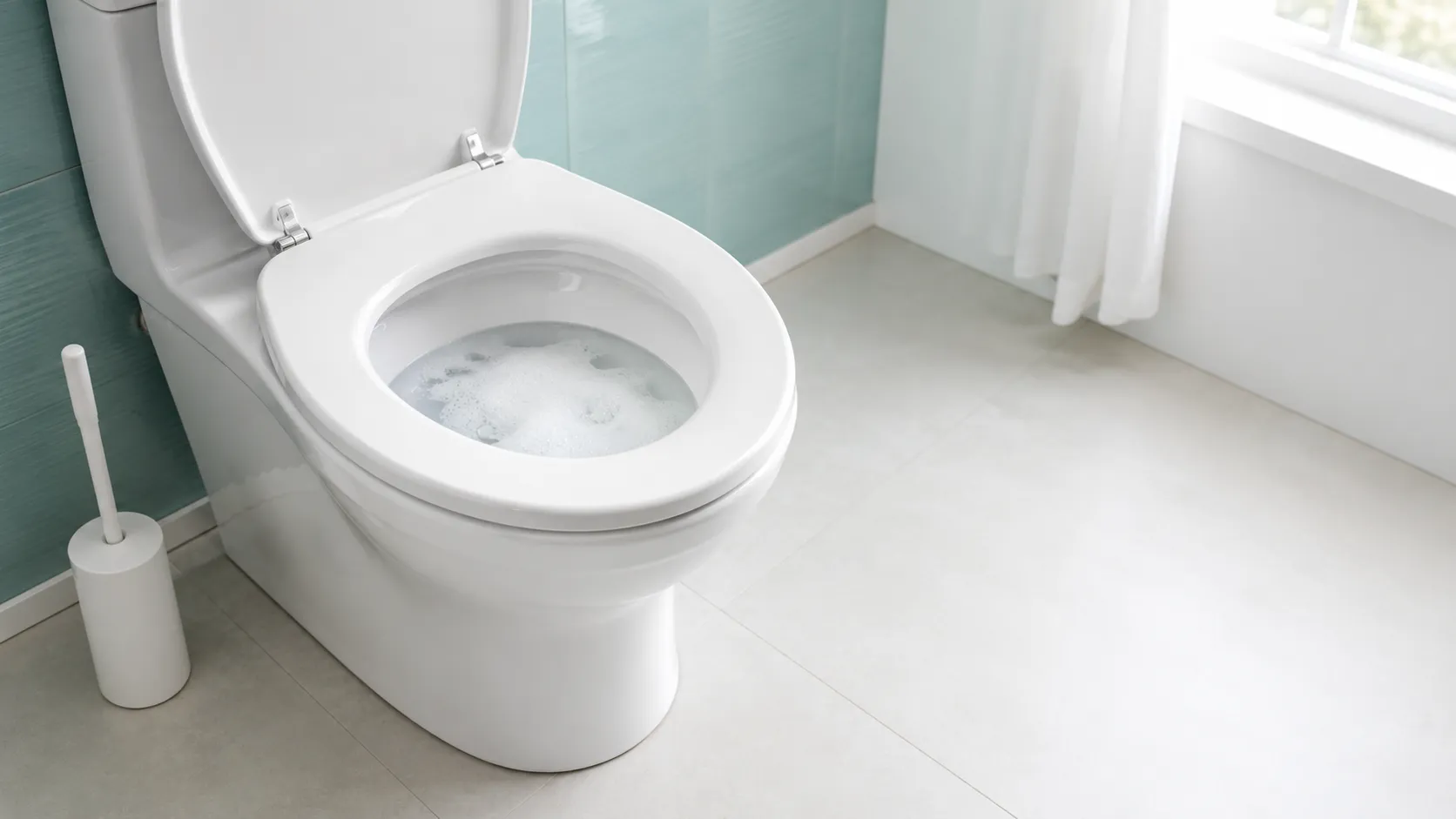
A foaming toilet bowl cleaner is a bowl-use cleaner that creates foam after it contacts toilet water. It is designed to make routine bowl cleaning easier by spreading cleaning solution through the water, then pairing that cleaning step with brushing and flushing. The result still depends on the finished formula, the type of buildup, the label directions, and the amount of physical brushing used.
This guide explains what a foaming toilet bowl cleaner is, how to use a powder format, what it can and cannot be expected to do, and what private-label buyers should confirm before launching one.
Quick Answers
| Question | Short answer |
|---|---|
| Do foaming toilet bowl cleaners really work? | They can support routine bowl cleaning when the formula, dwell time, and brushing are appropriate. Foam alone is not proof of deep cleaning or disinfection. |
| What is a foamy toilet bowl cleaner? | It is a bowl-use cleaner—often powder, tablet, or liquid—that foams in toilet water to help distribute the cleaner before brushing and flushing. |
| How do you use foaming toilet cleaner powder? | Follow the finished label. For the LWASH sample format, pour the powder into bowl water, allow foam to develop, brush, and flush after 15–30 minutes. |
| Can it replace regular cleaning? | No. It is part of a cleaning routine; heavy mineral buildup, persistent stains, leaks, or plumbing problems may need another method or professional attention. |
| Can it be mixed with bleach or another cleaner? | No. Use one product at a time and never mix household cleaners unless the finished label explicitly allows it. |
In this guide
- What a foaming toilet bowl cleaner is
- Whether foaming toilet cleaners work
- How to use foaming cleaner powder
- What foam can and cannot do
- How to choose the right format
- Safe-use basics
- Private-label buyer checklist
- Frequently asked questions
What Is a Foaming Toilet Bowl Cleaner?
Short answer: A foaming toilet bowl cleaner is intended for direct use in the toilet bowl. It may come as a powder, tablet, or liquid, but the key feature is that it produces foam in the bowl so the cleaner can be spread before brushing and flushing.
Do not confuse a bowl-use foaming product with an in-tank tablet, rim block, or automatic cleaner. They are different formats with different placement, directions, and compatibility considerations. A bowl-use powder should be used only as directed on its final package; it is not a substitute for a product specifically labeled for the tank.
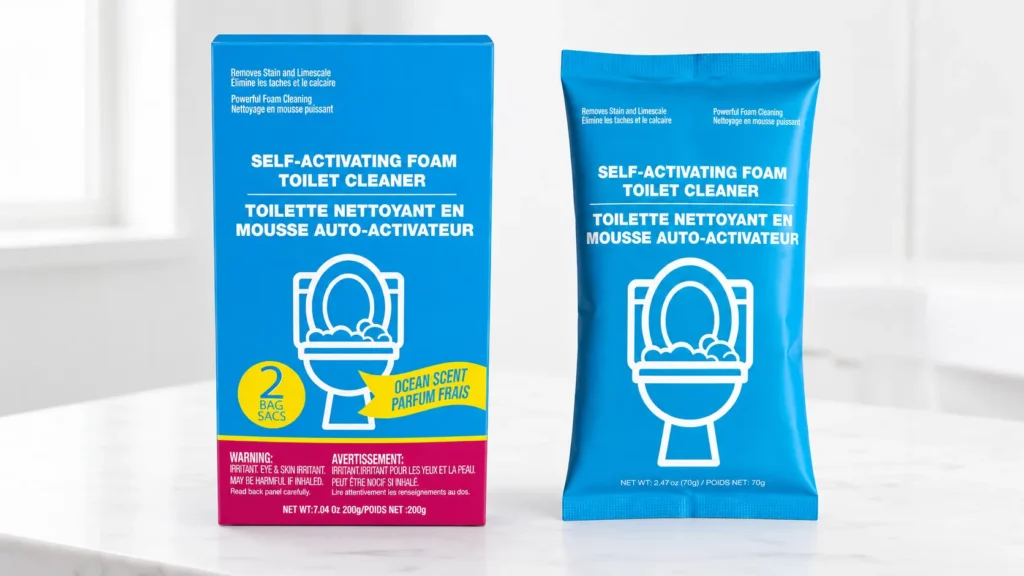
The LWASH foam toilet bowl cleaner is a self-activating powder format for bowl cleaning. The supplied sample is a two-bag retail box with 200 g total net weight and an ocean scent. Final formula, claims, warnings, and use directions must always follow the approved product label for the target market.
Do Foaming Toilet Bowl Cleaners Really Work?
Short answer: They can work well for their intended routine-cleaning job, but they are not a universal answer to every toilet problem. The foam helps deliver the cleaner through bowl water; the final result depends on the formula, contact time, brushing, stain type, water conditions, and whether the cleaner is used exactly as directed.
For everyday residue and routine cleaning, a foaming format can be convenient because it combines the application step with visible foam. It should not be marketed as a guarantee that a toilet is deeply cleaned, disinfected, or free from every type of stain. The U.S. Environmental Protection Agency distinguishes ordinary cleaning from sanitizing and disinfecting: cleaning removes dirt and organic matter, while sanitizing and disinfecting are separate claims subject to specific product requirements. See the EPA’s guidance on cleaning, sanitizing, and disinfecting.
A practical routine is simple: use the product according to its label, brush the bowl—including the waterline and underside of the rim where appropriate—and flush when the stated dwell time is complete. The foam is part of the cleaning experience, not a replacement for correct use.
How to Use Foaming Toilet Bowl Cleaner Powder
Short answer: Follow the finished label first. The correct dose and dwell time can vary by formula, pack size, and market. Do not borrow directions from an unrelated tablet, gel, or liquid product.
For the supplied LWASH sample direction, the normal sequence is:
- Read the approved package directions and safety information before opening the product.
- Pour the powder into the toilet bowl water as directed.
- Allow the foam to develop. The supplied sample packaging indicates a 15–30 minute dwell time.
- Brush the bowl surfaces after the stated dwell time.
- Flush the toilet and rinse the brush according to normal cleaning practice.
Keep the bathroom ventilated, avoid splashing, and keep children and pets away from the bowl while cleaner is in use. If the final product label differs from these sample instructions, the final label controls.
What Can a Foaming Toilet Cleaner Help With—and What Can’t It Do?
Short answer: A bowl-use foaming cleaner can support regular cleaning of everyday residue and, where the final formula supports it, routine limescale and stain cleaning. It should not be presented as an all-purpose repair, plumbing, or disinfection solution.
| Reasonable expectation | Do not assume or promise |
|---|---|
| Foam can help distribute a bowl-use cleaner before brushing. | Foam alone proves that the toilet is fully clean. |
| Routine cleaning support for the use described on the finished label. | Every type of old, heavy, rust, or hard-water stain will disappear. |
| A fresh scent if fragrance is part of the finished formula. | Fragrance diagnoses or solves all bathroom-odor causes. |
| Cleaning according to a specific approved use instruction. | Disinfecting, antibacterial, or germ-killing performance without the required substantiation and label claim. |
Hard-water and rust marks can be especially stubborn because they are often mineral-related. Clorox notes in its hard-water stain guidance that limescale and rust can require a cleaner designed for that specific stain type. If repeated correct use does not improve a heavy stain, choose a formula and method appropriate to the stain rather than using more product than the label directs.
A foaming toilet cleaner also cannot correct a leak, poor flushing, a blocked rim, or another plumbing fault. If a toilet has persistent odor, recurring staining, slow flushing, or visible leakage, investigate the underlying cause instead of treating more cleaner as a repair.
What Is the Best Foaming Toilet Bowl Cleaner?
Short answer: There is no single best foaming toilet bowl cleaner for every toilet, stain, or household. The best choice is the one whose finished label matches the cleaning task, surface, and desired product format.
Choose by the problem you are trying to solve rather than by foam volume or fragrance alone:
- For routine bowl cleaning: Choose a bowl-use product with clear directions, a stated dwell time, and a brushing step.
- For visible limescale, mineral marks, or rust: Check that the finished formula and label specifically support that stain type. Do not assume every foaming cleaner has the same performance.
- For continuous between-cleaning freshness: Consider whether an in-tank tablet, rim product, or other automatic format is more suitable. These must not be used as if they were bowl-use foaming powders.
- For a private-label range: Confirm format, formula direction, fragrance, pack size, use instructions, and claim evidence before packaging is approved.
If you need an automatic format rather than a direct bowl-cleaning powder, compare it with a product made for that use, such as LWASH automatic toilet bowl cleaner tablets. Clear placement language helps consumers use the right product in the right part of the toilet.
Can You Mix Foaming Toilet Cleaner With Bleach or Other Products?
Short answer: No. Do not mix foaming toilet bowl cleaner with bleach, acids, ammonia-containing products, drain openers, disinfectants, or another toilet cleaner unless the final label explicitly instructs otherwise.
Cleaning-product ingredients vary, and mixtures can create hazardous fumes. Poison Control warns that mixing bleach with toilet bowl cleaners can form toxic gases, especially when a cleaner contains acid or ammonia. Use one cleaner at a time, ventilate the room, avoid splashing, and follow the product label and SDS.
Safety note: Keep toilet cleaners in their original packaging, out of reach of children and pets. Avoid contact with eyes and skin, wash hands after handling, and seek local poison-control or medical guidance for an exposure incident. This article does not replace the finished product label, SDS, or emergency instructions.
What Should Private-Label Buyers Check Before Sourcing Foaming Toilet Bowl Cleaner?
Short answer: Define the product’s intended use and evidence-supported claim scope before choosing packaging. A strong retail design cannot correct unclear directions or unsupported claims.
- Product format: Confirm that it is a direct bowl-use powder, not a tank tablet, rim block, or drain cleaner.
- Formula and cleaning scope: Confirm which stains and surfaces the finished formula is designed to address, and test the actual formula before making performance claims.
- Pack and dose: Confirm bag count, powder weight, net contents, dosing directions, dwell time, storage, and shelf-life information.
- Fragrance and appearance: Confirm fragrance, powder color, foam appearance, and the claims that can safely appear on the retail box.
- Safety and compliance: Review the final SDS, warning panel, first-aid wording, label language, ingredient disclosure requirements, and target-market rules.
- Claims: Do not print terms such as disinfects, antibacterial, non-toxic, eco-friendly, safe for all toilets, or a universal stain-removal promise unless the finished product has the necessary evidence and approvals.
LWASH can discuss a foam toilet bowl cleaner project with customizable bag count, powder weight, fragrance, box artwork, label language, barcode, warning panel, and carton information. Visit the foam toilet bowl cleaner product page or contact LWASH with the target market, intended pack size, expected order quantity, and packaging brief.
Frequently Asked Questions
What is a foamy toilet bowl cleaner?
A foamy toilet bowl cleaner is a bowl-use cleaning product that creates foam in toilet water. It may be a powder, tablet, or liquid. The intended use, dose, contact time, and claims depend on the finished product label.
Do foaming toilet bowl cleaners actually work?
They can support routine bowl cleaning when used as directed and paired with brushing. The result depends on the formula, dwell time, water conditions, and type of buildup. Foam by itself is not proof of deep cleaning, disinfection, or universal stain removal.
How long should foaming toilet cleaner sit before flushing?
Follow the finished label. For the supplied LWASH powder sample, the direction is to allow the foam to develop, brush, and flush after 15–30 minutes. Do not assume that another foaming powder, tablet, or liquid has the same dwell time.
Can foaming toilet bowl cleaner remove hard-water stains?
Only make that expectation when the specific finished formula and label support it. Mineral buildup, rust, and old stains can need a formula designed for that stain type, along with brushing. If a stain persists, do not exceed the approved dose or mix products.
Can I use foaming toilet cleaner in the toilet tank?
No, unless the final product label specifically says it is designed for tank use. A direct bowl-use powder and an in-tank tablet are different products and should not be used interchangeably.
Can I mix foaming toilet cleaner with bleach?
No. Do not mix toilet cleaner with bleach or other household cleaners. Use one product at a time and follow the final label, because incompatible mixtures can produce hazardous fumes.
What should I look for in a private-label foaming toilet bowl cleaner?
Confirm the format, intended use, formula direction, pack size, fragrance, clear use directions, warning language, claim evidence, final SDS, and target-market compliance requirements before the packaging is approved.
Sources and Further Reading
- U.S. Environmental Protection Agency: What’s the difference between products that disinfect, sanitize, and clean surfaces?
- Poison Control: Automatic toilet bowl cleaner—safe to use?
- Clorox: How to remove hard-water stains from a toilet
Planning a foaming toilet bowl cleaner line? Begin with the target market, product format, final claim scope, safety wording, and packaging brief. Contact LWASH to discuss a private-label foam toilet bowl cleaner project.