
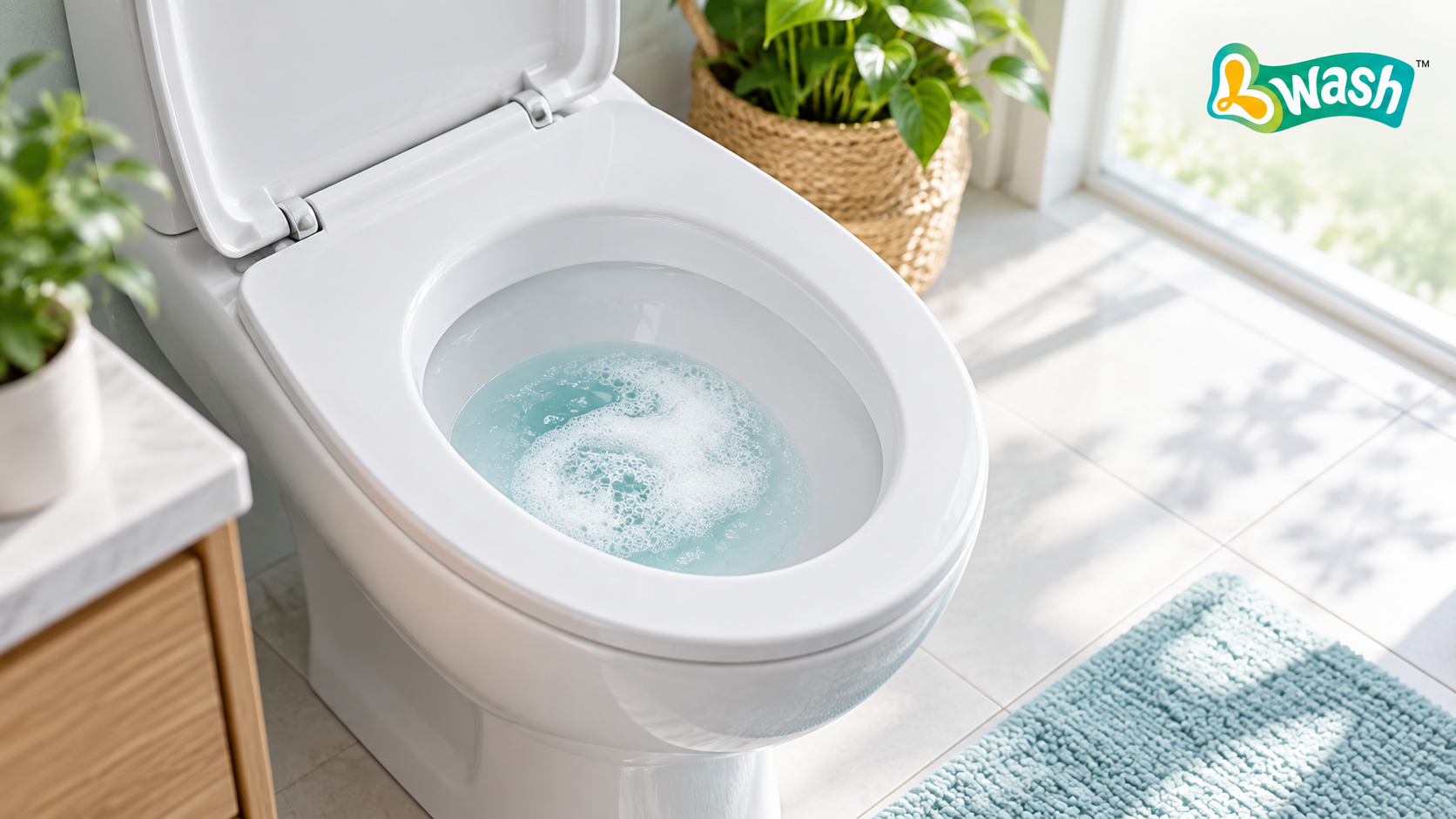
Toilet bowl cleaning tablets can make a single bowl-cleaning session easier to measure and use. The type covered here goes directly into toilet bowl water, where it dissolves and fizzes or foams. You then finish the job according to the product label, usually with brushing and flushing. It is different from an automatic tablet designed to sit in the tank and release cleaner over many flushes.
For a useful result, choose the tablet for the job you actually have. A tablet intended for routine bowl cleaning may not be the right answer for thick mineral deposits, and visible foam alone does not show how much soil a formula removes. The finished label determines where to place the tablet, how much to use, how long to wait, and which claims apply.
What Are Toilet Bowl Cleaning Tablets?
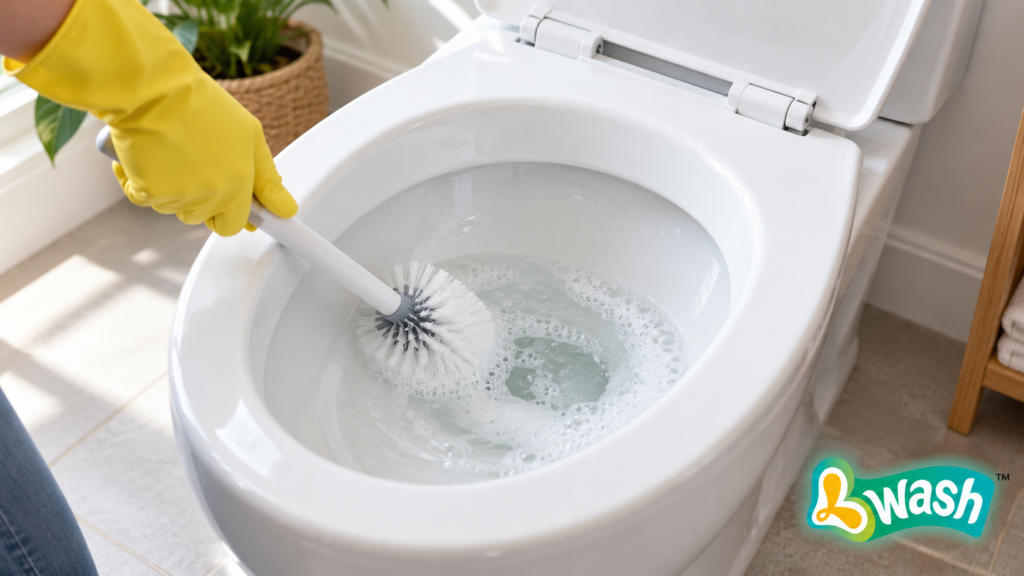
In this guide, “toilet bowl cleaning tablets” refers to direct-to-bowl tablets: single-use solids placed in the water inside the toilet bowl. The tablet dissolves and delivers cleaner to the bowl water and trap area. Brushing helps reach the bowl wall and under the rim, where a tablet sitting in the water may not contact every surface equally.
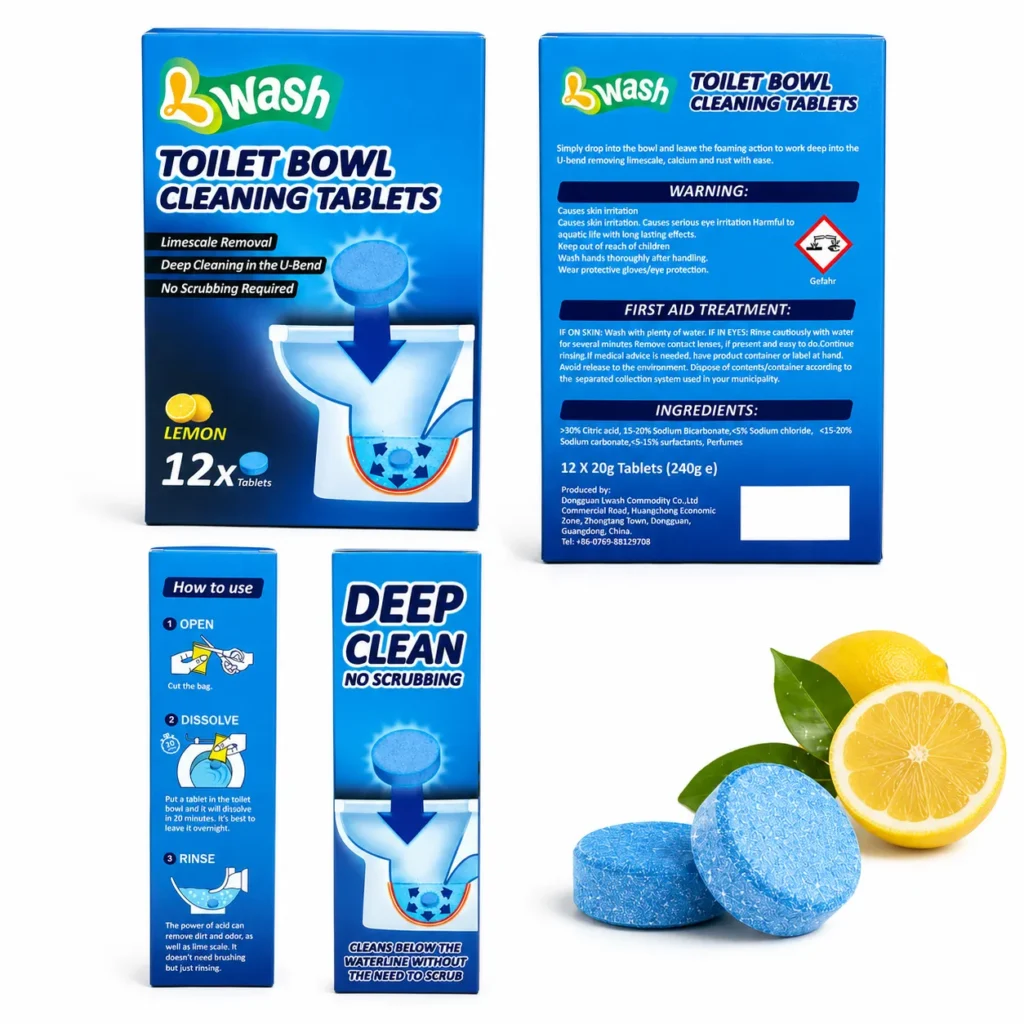
For example, LWASH’s foaming toilet bowl cleaning tablets are presented as a lemon-scented 12-pack with 20 g per tablet. The sample is intended for direct bowl and U-bend care. These are sample specifications; final directions and performance claims must follow the confirmed formula and retail label.
How Do You Use Toilet Bowl Cleaning Tablets?
Use a direct-to-bowl tablet only as its finished label instructs. The basic sequence is simple, but there is no universal tablet dose or waiting time.
- Check the label and the toilet. Confirm that the product is labeled for direct bowl use, and check any surface or fixture restrictions.
- Use the stated amount. Put the tablet into the bowl water, not into the tank, unless the product specifically says otherwise.
- Allow the stated contact time. Let the tablet dissolve and foam for the time printed on the finished pack. Keep children and pets away from the toilet during cleaning.
- Brush where needed, then flush. Follow the label’s brushing and flushing directions, including any instructions for the waterline or under the rim.
Do not increase the dose or extend the time because a stain remains. Identify the stain and use a product labeled for it. Never add another cleaner to an active tablet treatment. If an automatic tablet is already in the tank, check both products’ labels for compatibility before using a bowl cleaner.
Do Toilet Bowl Cleaner Tablets Actually Work?
Yes, a suitable tablet can support the cleaning task named on its label. The outcome depends on the finished formula, contact time, water conditions, the type and age of the deposit, and whether the bowl is brushed. Fizzing is a delivery feature; it is not, by itself, proof of stain removal or disinfection.
For mineral buildup, read the claim carefully. Limescale and rust differ from ordinary surface soil, and they may require a cleaner formulated for those deposits. Clorox’s guide to hard-water stains explains why mineral deposits need a suitable cleaning approach. The LWASH sample packaging mentions limescale, calcium, and rust care, but any final retail claim should be supported by the finished formula, testing, and approved label.
Cleaning and disinfecting are also different jobs. The U.S. Environmental Protection Agency distinguishes removal of dirt during cleaning from regulated sanitizing and disinfecting claims. A tablet should not be presented as a disinfectant simply because it foams or makes the bowl look clean.
Direct-to-Bowl Tablets vs. Automatic Tank Tablets
The placement is the quickest way to tell the two formats apart. Clorox’s instructions for its automatic tablets place that product in the tank, illustrating why the pack directions matter. A bowl tablet should not be treated as a tank tablet.
| Question | Direct-to-bowl cleaning tablet | Automatic in-tank tablet |
|---|---|---|
| Where does it go? | Into bowl water for one cleaning session | Into a permitted tank position, as directed |
| When is it used? | During a deliberate cleaning session | Between manual cleanings, releasing product with flushes |
| Does it replace brushing? | Follow the label; brushing may still be needed | It does not replace all manual cleaning |
| How long does one tablet last? | One application for the LWASH sample format | Depends on the specific product and flushing conditions |
If you are choosing a continuous-care format, see LWASH’s automatic in-tank toilet cleaner tablets. If you prefer a measured powder for a direct bowl-cleaning session, see the related foaming toilet bowl cleaner guide. Each format needs its own use directions and compatibility checks.
What Should You Check Before Buying Toilet Bowl Cleaning Tablets?
Start with the placement instructions and the stain you need to address. A useful label should state where the tablet goes, the amount per application, the waiting time, whether brushing is needed, the surface restrictions, and what not to mix with it. If a pack makes limescale, rust, antibacterial, or disinfecting claims, check that those claims apply to the finished product rather than to a different formula or sample.
Handle household cleaners carefully. Poison Control advises keeping toilet cleaners away from children, avoiding eye and skin contact, and never combining toilet bowl cleaner with bleach. Follow the warning and first-aid language on the final pack.
What Should Private-Label Buyers Confirm?
For brands, importers, wholesalers, and retail buyers, the product format should be easy for a customer to identify at a glance. Direct-to-bowl placement, single-use directions, and the limits of any stain claims should be clear on the pack and on the product listing.
- Tablet and pack: tablet weight, count, fragrance, color, retail box, and outer carton.
- Directions: dose, contact time, brushing, flushing, storage, and child-safety wording for the target market.
- Claims: evidence for each promised stain type or antimicrobial effect, matched to the final formula and market requirements.
- Channel fit: readable pack images, barcode, label language, shipping configuration, and samples for product review.
LWASH’s current lemon sample is a 12 × 20 g retail box. Fragrance, tablet count and weight, artwork, warnings, barcode, and multilingual text are options to discuss during an OEM or private-label project. Ask for confirmation of the finished specification, sample, minimum order quantity, and documentation before approving retail copy. See the foaming toilet bowl cleaner tablets product page for the sample format.
Can I put a toilet bowl cleaning tablet in the toilet tank?
Only if that specific product’s label says it is made for tank use. The direct-to-bowl tablets discussed here belong in the bowl, not in the tank.
How long do toilet bowl cleaning tablets last?
The LWASH direct-to-bowl sample is intended for one cleaning application per tablet. Automatic tank tablets are a different format; their duration depends on the product and flushing conditions.
Are foaming toilet tablets the best choice for heavy limescale?
Not automatically. Choose by the finished label and the type of deposit. Heavy mineral buildup may need a cleaner specifically formulated and tested for that task. Do not mix products or exceed the labeled dose.
Are toilet bowl cleaning tablets the same as bleach tablets?
No. “Tablet” describes the format, not a shared formula. Check the ingredient and warning information on the finished pack; do not infer bleach content, disinfection, or compatibility from the tablet shape.
Are toilet bowl cleaning tablets safe for every toilet?
No blanket compatibility claim applies to every formula and fixture. Check the finished cleaner label and your toilet manufacturer’s care instructions, use the tablet only in the stated location, and never mix it with another cleaner.
Planning a private-label toilet cleaner tablet line? Share your target market, desired tablet and pack specification, fragrance, order quantity, and the claims you need to support. Contact LWASH to discuss a sample and packaging brief.