
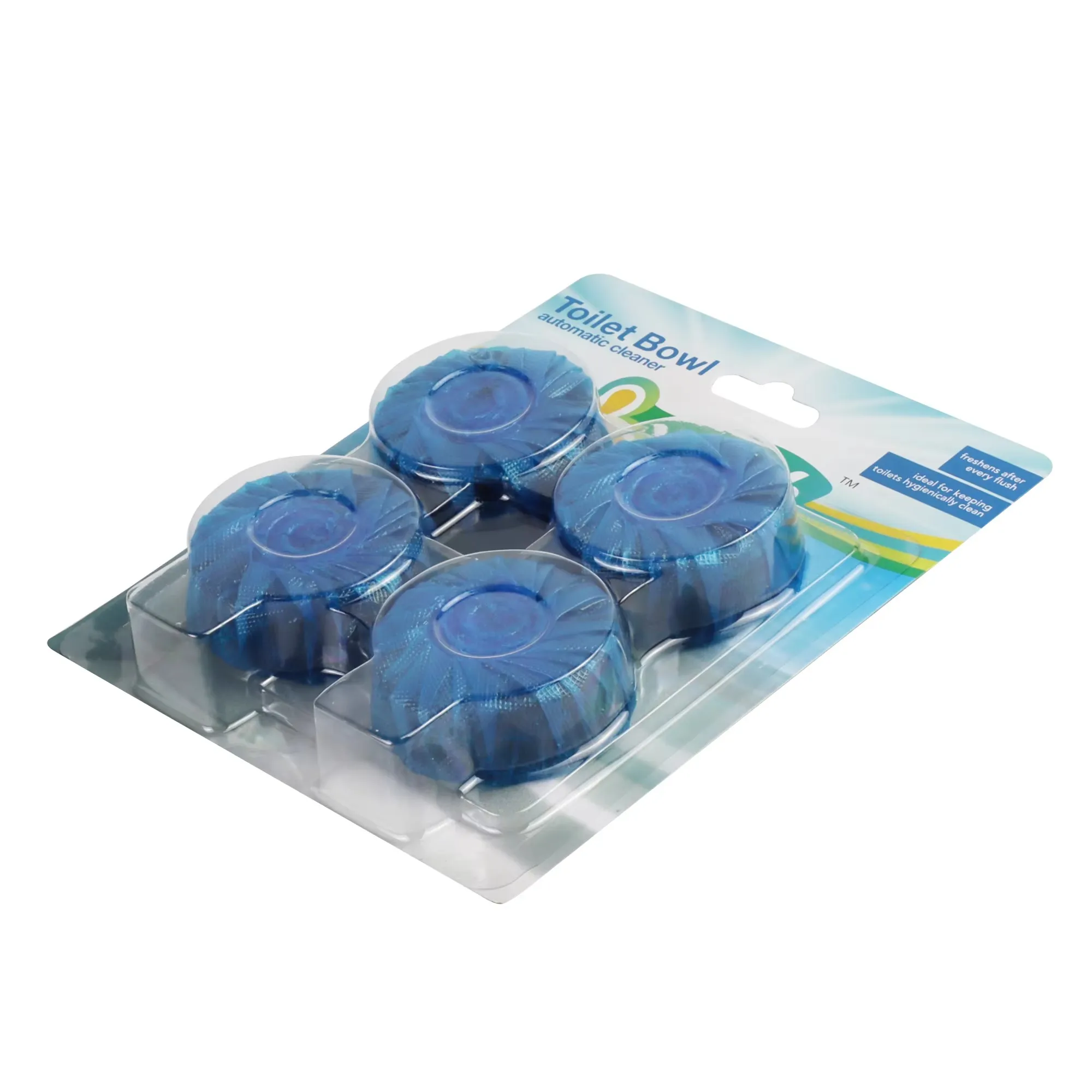
Toilet cleaner tablets are searched in many different ways: toilet blue tablets, toilet blue blocks, toilet tank tablets, toilet bowl cleaner tablets, automatic toilet bowl cleaner tablets, and even toilet tablet holders. These words are related, but they do not always describe the same product.
This FAQ answers the common questions users and buyers ask before using, listing, or sourcing toilet cleaner tablets. The answers stay practical: what the product is, where it is used, what it can and cannot do, what safety wording needs caution, and what B2B buyers should check before private label sourcing.
What are toilet cleaner tablets?
Short answer: Toilet cleaner tablets are solid cleaning products designed for toilet care, but the exact use depends on the product type.
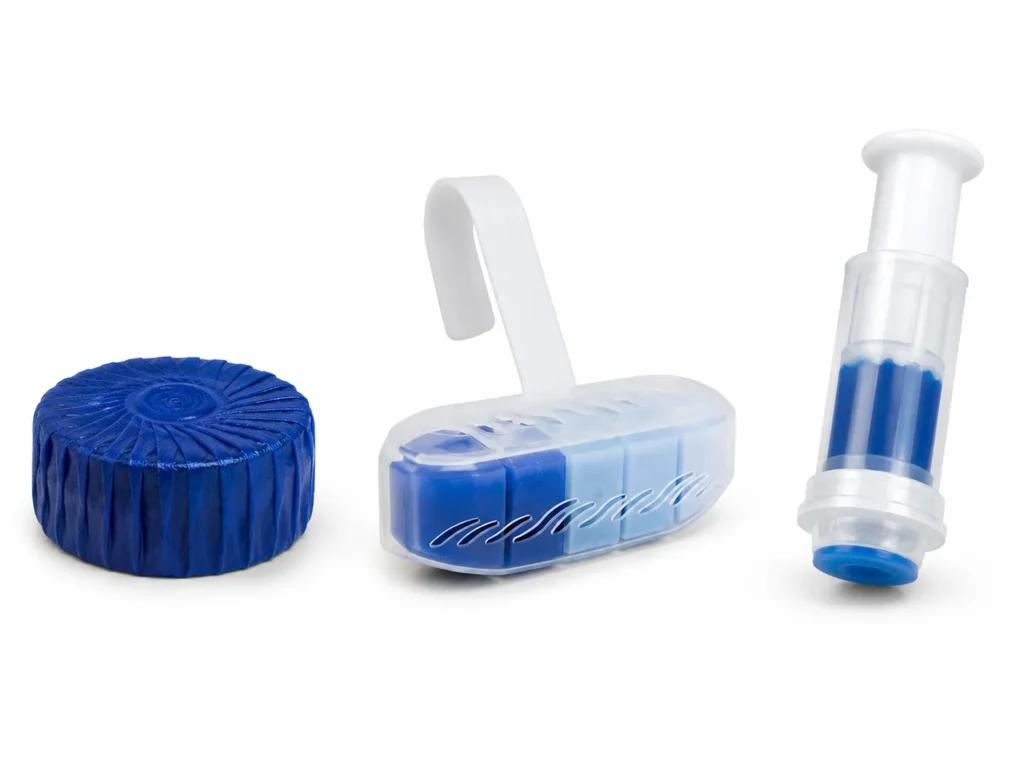
Some toilet cleaner tablets are placed in the toilet tank. Some are used directly in the bowl. Some are rim blocks, hanging blocks, holders, gel stamps, or foaming tablets. That is why a product page should not rely on the broad name alone.
For users, the key question is where the tablet is designed to go. For buyers, the key question is how the label, packaging, usage instructions, and claims define the product.
What are toilet cleaner tablets used for?
Short answer: Toilet cleaner tablets are usually used for regular toilet freshness, visible color, fragrance, bowl maintenance, or cleaning support between deeper cleaning routines.
The exact function depends on the formula and placement. An in-tank blue tablet may release color and cleaning ingredients through flush water. A bowl tablet may be designed to fizz, foam, or be brushed in the bowl. A rim block may release fragrance and cleaning ingredients from the rim area.
Do not present all toilet cleaner tablets as disinfectants, stain removers, limescale removers, or septic-safe products unless the final product has suitable evidence and label support.
Are toilet cleaner tablets the same as toilet blue tablets?
Short answer: Not always. Toilet blue tablets are usually one visible type of toilet cleaner tablet, but not every toilet cleaner tablet is blue.
In search and retail language, toilet blue tablets often refer to blue in-tank tablets or blue toilet blocks that turn flush water blue. They are easy for consumers to recognize because the blue water gives a visible usage signal.
However, toilet cleaner tablets can also be white, two-color, fragrance-focused, foaming, in-bowl, rim-mounted, or used with a holder. For B2B buyers and sellers, it is better to explain the placement and use method instead of treating every tablet as a “blue tablet.”
Are toilet blue tablets the same as toilet blue blocks?
Short answer: In many markets, the phrases overlap, but they are not a technical guarantee.
Toilet blue tablets and toilet blue blocks usually describe solid blue products used for toilet freshness or cleaning support. In some listings, they are in-tank blocks. In others, they may be rim blocks, hanging blocks, or multi-purpose toilet blocks.
If you are writing a product page, say exactly what the product is: in-tank tablet, rim block, hanging cleaner, in-bowl tablet, or gel stamp. The customer should not have to guess from the word “blue.”
Are toilet cleaner tablets the same as toilet tank tablets?
Short answer: Toilet tank tablets are one type of toilet cleaner tablet, but toilet cleaner tablets can include other formats too.
Toilet tank tablets are designed to sit inside the toilet tank and release ingredients into flush water over time. Similar products may be called automatic toilet bowl cleaner tablets, drop-in toilet tablets, toilet blue tablets, or in-tank blue blocks.
But some toilet cleaner tablets are only meant for the bowl, not the tank. Blueland’s toilet bowl cleaner FAQ, for example, says its toilet cleaner tablets are for bowl use only, not tank use. That kind of distinction is exactly why placement must be clear.
Reference: See the existing Lwash guide, Toilet Tank Tablets vs Toilet Bowl Cleaner Tablets.
Are toilet cleaner tablets the same as toilet bowl cleaner tablets?
Short answer: Sometimes the terms overlap, but toilet bowl cleaner tablets may mean either bowl-use tablets or automatic products that clean the bowl through tank water.
This is a common naming problem. Some brands use “toilet bowl cleaner tablets” for in-tank automatic tablets because the tablet sits in the tank but affects the bowl water. Other brands use similar wording for tablets dropped directly into the bowl.
For product pages and customer FAQs, avoid confusion by adding the use location: “in-tank,” “in-bowl,” “rim block,” “holder,” or “gel stamp.”
What is the difference between toilet tank tablets, bowl tablets, rim blocks, holders, and gel stamps?
Short answer: The biggest difference is where the product is placed.
| Product type | Usual placement | What buyers should clarify |
|---|---|---|
| Toilet tank tablets | Inside the water tank | Tank compatibility, placement, use cycle, claim wording |
| Toilet bowl tablets | Directly in the bowl | Brushing, fizzing, dwell time, flushing instructions |
| Toilet rim blocks | On or near the toilet rim | Holder design, fragrance, replacement interval |
| Toilet tablet holders | A holder system for a block or tablet | Refill size, clip fit, packaging |
| Gel stamps | Stuck inside the bowl area | Adhesion, fragrance, flush behavior, residue |
For private label buyers, this distinction affects packaging, instructions, product photos, customer service, and compliance wording.
Do toilet cleaning tablets work?
Short answer: Toilet cleaning tablets can work for the purpose they are designed for, but they should not be treated as a universal toilet-cleaning solution.
An in-tank tablet may help with visible blue water, fragrance, and regular freshness between deeper cleaning routines. A bowl tablet may support direct cleaning when used with brushing. A rim block may provide ongoing fragrance and cleaning support around the bowl area.
They do not replace every part of toilet care. Heavy buildup, leaks, constant odor, running water, hard-water scale, or plumbing problems may need manual cleaning, maintenance, or a different product.
Do toilet blue tablets only make the water blue?
Short answer: The blue color is a visible signal, but the full function depends on the formula.
Many toilet blue tablets are marketed around continuous blue water, freshness, fragrance, or cleaning support. The color helps users see that the product is active, which is useful for retail and e-commerce explanation.
But blue water alone is not proof of deep cleaning, disinfection, hard-water removal, or plumbing safety. Product pages should not say “blue means fully clean” unless the product has evidence for the specific claim.
Can toilet cleaner tablets help with odor?
Short answer: Some toilet cleaner tablets can support a fresher toilet experience, especially if they include fragrance or deodorizing ingredients.
Odor claims still need careful wording. A tablet may help with regular freshness, but toilet odor can also come from poor ventilation, water seal problems, dirty rim areas, leaks, drains, or buildup that needs manual cleaning.
For product content, safer wording is “supports regular toilet freshness” or “provides a fresh scent during routine use.” Avoid broad claims like “eliminates all odors” unless the final product and test data support it.
Can toilet cleaner tablets remove brown buildup or heavy stains?
Short answer: Do not assume that a toilet cleaner tablet can remove heavy brown buildup or severe stains.
Brown buildup may be related to hard water minerals, rust, organic residue, infrequent cleaning, or local water conditions. A regular-use tablet may help reduce some everyday buildup depending on formula, but severe stains often need direct cleaning, brushing, or a product designed for that stain type.
This is an important boundary for sellers. If a product is mainly a freshness or blue-water tablet, do not market it as a heavy-duty stain remover without evidence.
Are toilet cleaner tablets a replacement for regular toilet cleaning?
Short answer: No. Toilet cleaner tablets should be positioned as support between regular cleaning routines, not as a full replacement for manual cleaning.
Clorox describes adding automatic toilet cleaning tablets after deep cleaning as a way to help keep the toilet clean and fresh between scrubbings. That is a useful framing for this category.
For buyers and sellers, this is also safer content. A realistic promise reduces complaints. A tablet can be part of a toilet-care routine, but users still need regular bowl cleaning, exterior cleaning, and maintenance checks.
Reference: See Clorox toilet cleaning guidance.
How do you use toilet cleaner tablets?
Short answer: Follow the product label, because the correct use method depends on whether the tablet is for the tank, bowl, rim, holder, or gel format.
For an in-tank tablet, major brand instructions commonly involve cleaning the toilet first, opening the package carefully, placing the tablet in the tank according to label directions, and avoiding direct hand contact. Ty-D-Bol’s blue in-tank tablet directions, for example, say to place the tablet in the tank away from the float assembly and wait before flushing.
For an in-bowl tablet, the product may need to dissolve, foam, sit for a period, and be brushed before flushing. Do not use one product’s instructions for another format.
Reference: See Ty-D-Bol Original Blue Tablet directions.
Where do you put toilet blue tablets?
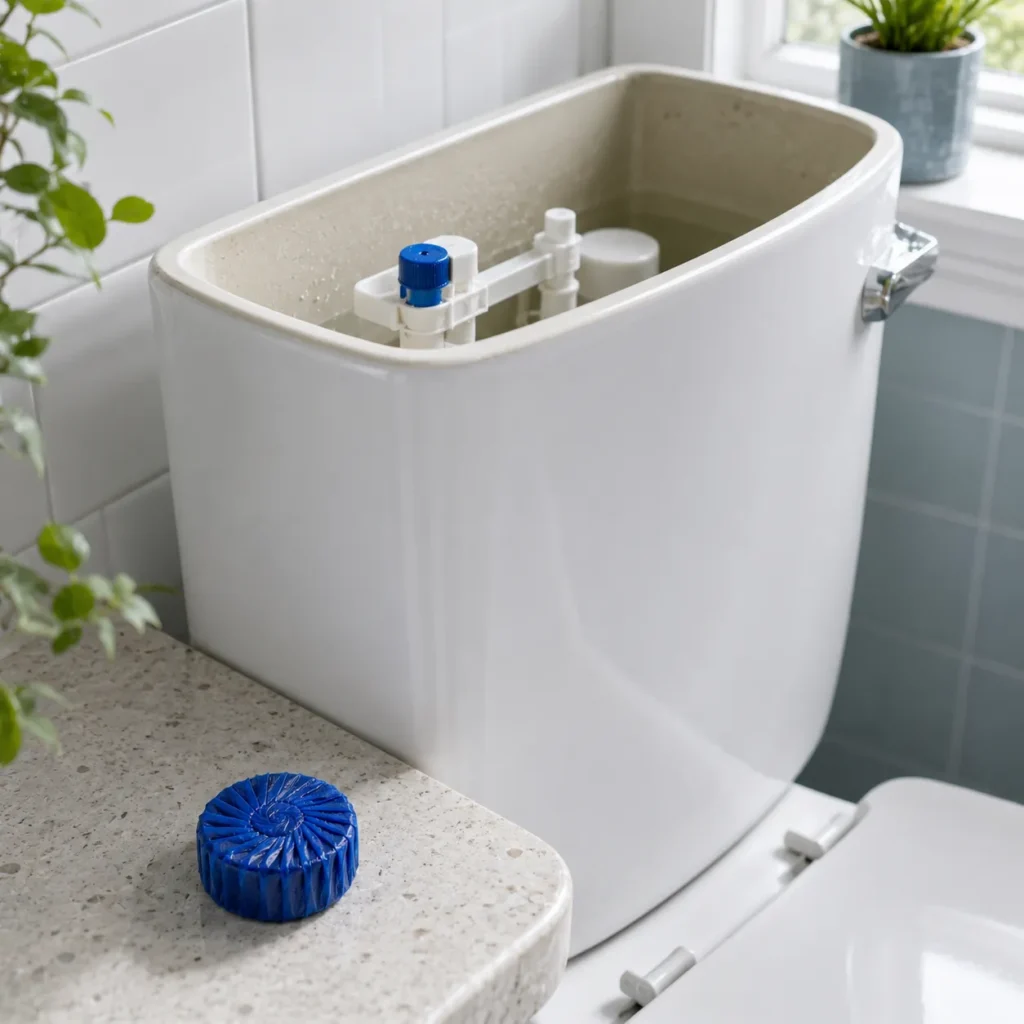
Short answer: Many toilet blue tablets are placed in the toilet tank, but the label must confirm the correct placement.
Search users often assume every blue tablet goes into the tank. That is common, but not guaranteed. Some blue or colored toilet products may be rim blocks, bowl tablets, or holder refills.
If the product is an in-tank blue tablet, placement matters. Some brands advise placing the tablet in a specific area of the tank and away from moving parts. If the product is for the bowl, it should not be put into the tank.
Can toilet cleaner tablets be put in the toilet tank?
Short answer: Only toilet cleaner tablets labeled for tank use should be put in the toilet tank.
This is one of the most important answers in the article. A broad product name does not prove tank compatibility. Some products are designed only for the bowl, and using them in the tank may create residue, foam, or compatibility problems.
For B2B buyers, the product page and package should say “in-tank” only when the product is designed and labeled that way. If the tablet is for the bowl or rim, say that clearly.
How often should you use toilet tablets?
Short answer: Use frequency depends on product type, tablet size, formula, water volume, flush frequency, and label instructions.
For Lwash private label inquiries, a common planning reference is an expected use cycle of about 2 to 4 weeks, depending on flushing frequency, tank conditions, tablet weight, formula, and storage. This should be treated as a planning reference, not a universal promise.
Before printing “lasts X weeks” on packaging, buyers should test the final sample under target-market water and flushing conditions.
How long do toilet blue tablets last?
Short answer: Toilet blue tablets may last days or weeks depending on tablet size, formula, water conditions, and how often the toilet is flushed.
For private label planning, Lwash can discuss common 50 g tablets and other customizable weights such as 40 g, 48 g, 60 g, 70 g, and 100 g. Larger tablets or slower-dissolving formulas may support a longer use cycle, but final duration should be tested.
A realistic product page should say “use time may vary” and explain the factors that affect it.
What does “toilet tank tablets without bleach” mean?
Short answer: It usually means the product is positioned as a non-bleach or bleach-free tank tablet, but the exact meaning depends on the formula and label.
This is a useful search term because many users worry about bleach or chlorine-based in-tank products. But “without bleach” should not automatically become “safe for all toilets,” “non-toxic,” “eco-friendly,” or “septic safe.”
If a buyer wants bleach-free wording, confirm the formula, ingredient declaration, test data, SDS, and target-market labeling rules before printing it on packaging.
Are toilet cleaner tablets safe for toilet tanks?
Short answer: Do not make a blanket safety claim for all toilet cleaner tablets or all toilet tanks.
Tank compatibility depends on formula, tablet placement, contact time, toilet design, water conditions, and tank components. Kohler notes that flapper or canister seals may wear over time due to water conditions or the use of in-tank cleaners. Fluidmaster gives a strong warning against bleach or chlorine in-tank drop-ins for its flapper warranty context.
For product pages, the safer wording is to follow the product label and avoid broad claims like “safe for all toilet tanks” unless supported by suitable evidence.
References: See Kohler Assist and Fluidmaster flapper warning.
Are toilet cleaner tablets safe for plumbing?
Short answer: Safety for plumbing should be answered by the product label, formula, and target application, not by the product category name alone.
Some brands claim their products are suitable for plumbing or septic systems when used as directed. Other toilet-parts companies warn against certain in-tank chemicals, especially bleach or chlorine products in contact with tank components.
For B2B buyers, do not copy a competitor’s plumbing or septic claim. If you want to use that wording, confirm the final formula, use instructions, compatibility data, and legal review for the target market.
Are bleach toilet tablets bad for toilet parts?
Short answer: Some toilet-parts guidance warns against bleach or chlorine in-tank drop-in products because they may affect tank components.
Fluidmaster’s flapper product page warns users not to use in-tank drop-in cleaners containing bleach or chlorine in its warranty context. Kohler also notes that water conditions or in-tank cleaners may contribute to seal wear over time.
This does not mean every toilet tablet has the same risk profile. It means content should be careful. Avoid saying “safe for every toilet” unless the product has evidence for that claim.
Can you mix toilet cleaner tablets with other toilet cleaners?
Short answer: Do not mix toilet cleaner tablets with other cleaners unless the product label clearly allows it.
Mixing cleaning products can create safety risks, especially when bleach or acidic cleaners are involved. Clorox warns not to mix bleach or bleach-containing products with acids or ammonia because hazardous gases may be released. Poison Control also warns against mixing bleach with toilet bowl cleaner.
For product labels and customer service scripts, a simple rule is best: use only as directed, and do not combine cleaners without label support.
References: See Clorox toilet cleaning guidance and Poison Control.
What happens if a child or pet drinks blue toilet water?
Short answer: Treat exposure seriously, rinse as appropriate, and contact Poison Control, a medical professional, or a veterinarian if needed.
Poison Control notes that automatic toilet bowl cleaners often contain detergents that can cause stomach upset if ingested. It also recommends keeping toilet cleaners away from children, keeping the toilet lid closed, avoiding direct skin or eye contact, wearing gloves when handling, and washing hands after handling.
For public product pages, avoid casual wording like “harmless.” Use prevention-focused language and refer users to the product label, poison center, doctor, or veterinarian for exposure situations.
Reference: See Poison Control’s automatic toilet bowl cleaner guidance.
Can you put a dishwasher tablet in the toilet tank?
Short answer: No. A dishwasher tablet is designed for dishwashers, not toilet tanks.
This question appears often because users compare solid cleaning formats. But a dishwasher tablet is made for a different machine, water temperature, rinse process, soil type, and material environment. In a toilet tank, it may create residue, foam, fragrance, or compatibility issues.
Use a product designed and labeled for toilet use. For a toilet tank, use a product specifically labeled for tank use.
What should buyers check before sourcing toilet cleaner tablets?
Short answer: Buyers should check the product type, placement, tablet size, formula direction, use cycle, packaging, instructions, and claim support before requesting bulk production.
A practical sourcing checklist includes:
- in-tank, in-bowl, rim block, holder, or gel format
- tablet weight and shape
- fragrance and color
- blue water or non-blue positioning
- expected use cycle
- packaging type and pack count
- label language and warnings
- storage and shipping requirements
- MOQ and lead time
- private label artwork
- claim wording such as bleach-free, septic-safe, hard water, fragrance, or odor control
What tablet size is common for private label toilet cleaner tablets?
Short answer: A common Lwash reference size is a 50 g round tablet, but custom sizes can be discussed.
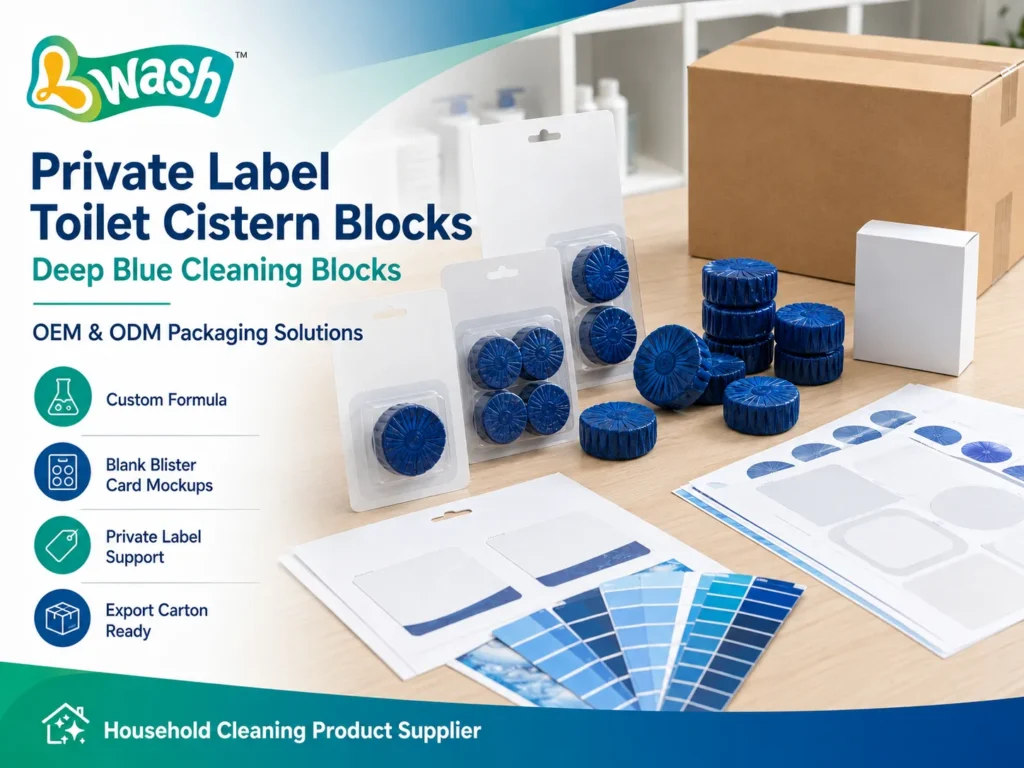
Lwash can discuss a common 50 g tablet, optional weights such as 40 g, 48 g, 60 g, 70 g, and 100 g, a round tablet size of about 4.5 cm diameter and 1.8 cm height, and a square option around 3 cm x 3 cm x 3 cm.
These details matter because tablet size affects use cycle, blister card design, shipping weight, product photos, and customer expectations.
What packaging options work for retail toilet cleaner tablets?
Short answer: Blister card packaging is a common option for retail toilet cleaner tablets.
For Lwash private label inquiries, common pack counts include 1, 2, 3, 4, or 6 tablets per blister card. A regular starting MOQ is 5,000 cards, and the usual shelf life reference is 3 years.
Retail packaging should leave enough room for product name, usage directions, warning text, first-aid information, barcode, net contents, claim wording, and brand design.
Reference product pages can include Lwash Automatic Toilet Bowl Cleaner Tablets and Lwash Blue Toilet Blocks.
Can toilet cleaner tablets be made with fragrance?
Short answer: Yes, fragrance options can be discussed for private label toilet cleaner tablets.
Lwash can customize fragrance, and many overseas buyers prefer scented versions because fragrance is easy for end users to notice. Scent direction may include fresh, ocean, lemon, pine, lavender, or buyer-defined directions depending on the project.
However, fragrance should not be described as solving every odor problem. It is better to say the product provides a fresh scent or supports a fresher toilet experience during regular use.
What claims should buyers avoid printing without testing?
Short answer: Buyers should avoid broad safety, environmental, plumbing, septic, antibacterial, and performance claims unless the final product has evidence.
Claims that need review include:
- non-toxic
- eco-friendly
- biodegradable
- septic safe
- safe for all toilets
- safe for all pipes
- disinfects
- kills bacteria
- antibacterial
- removes all limescale
- lasts 4 weeks in all toilets
- harmless
Some claims may be possible for a specific formula and market, but they should not be copied from competitors or written before formula, SDS, testing, and label review are confirmed.
Can toilet cleaner tablets be private label?
Short answer: Yes. Toilet cleaner tablets are suitable for private label projects when product type, packaging, fragrance, color, instructions, and claims are clearly defined.
For Lwash private label inquiries, buyers can discuss tablet weight, shape, color, fragrance, scented or unscented versions, blister card pack counts, label design, carton planning, and OEM/ODM support. The regular starting MOQ for the current toilet cleaner tablet line is 5,000 cards.
Buyers should prepare the target market, sales channel, expected pack count, desired fragrance, label language, claim wording, packaging reference, order quantity, and launch timeline before requesting samples.
How do you choose the right toilet cleaner tablets for your market?
Short answer: Choose by placement, customer expectation, channel, packaging, usage instructions, and claim support.
If your customers want visible blue water, a toilet blue tablet or blue block may be a good direction. If they want direct stain cleaning, an in-bowl tablet or foaming tablet may be easier to explain. If they want ongoing fragrance, rim blocks, holders, or scented tablets may fit better.
For B2B buyers, the best product is not just the strongest-sounding one. It is the one that your customers can understand, use correctly, store safely, and buy again. To discuss private label toilet cleaner tablets, blue toilet blocks, packaging, samples, and claim wording, view the Lwash toilet care product pages or contact Lwash.