
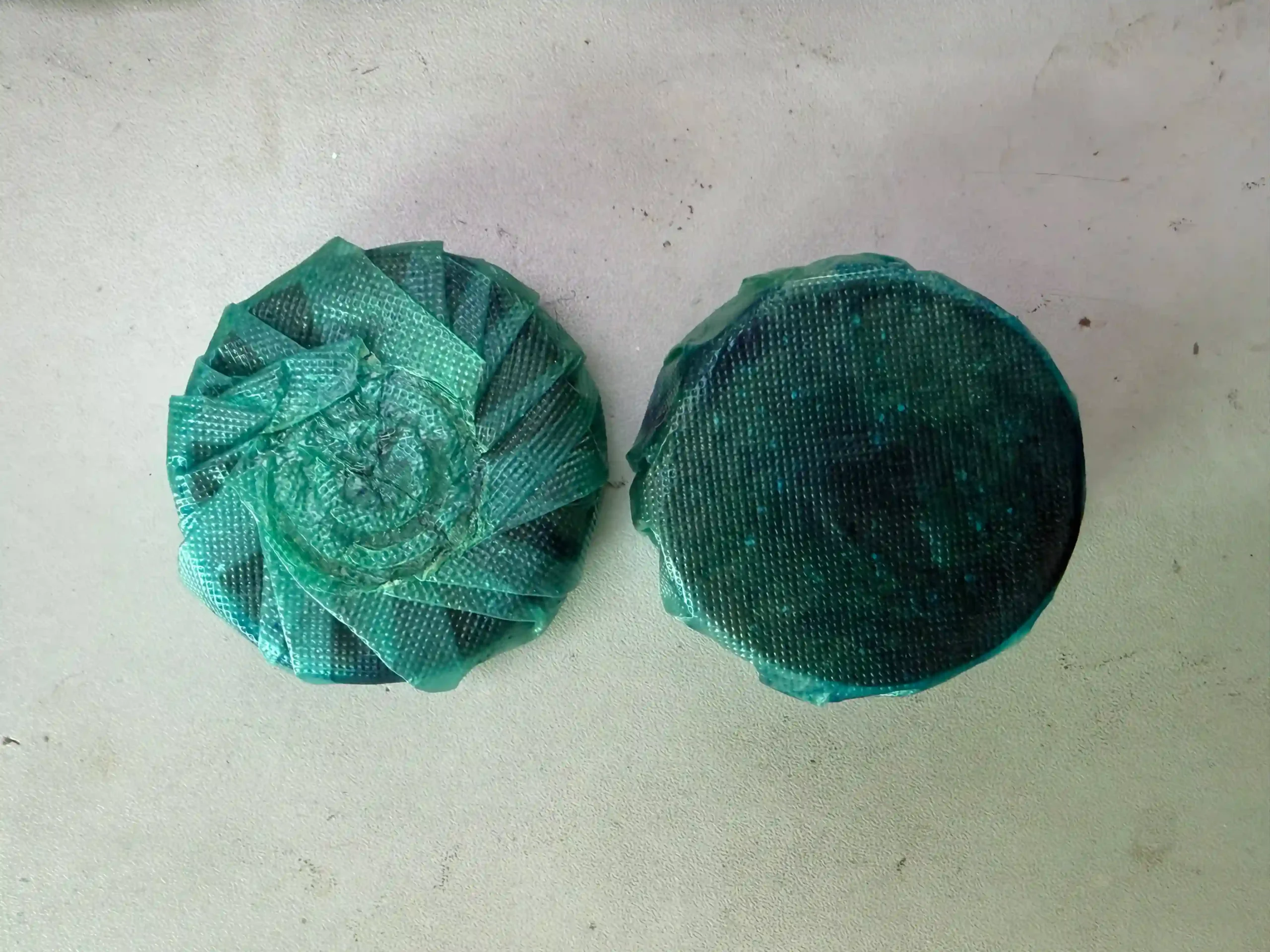
Toilet tank tablets look simple, but B2B buyers usually run into two practical problems: different suppliers use similar names for different toilet-cleaning formats, and many product claims need evidence before they can be printed on packaging.
For household users, the main question is usually simple: “Do these tablets help keep the toilet fresh between regular cleaning?”
For B2B buyers, the question is more practical: “Is this product suitable for my sales channel, packaging plan, customer expectations, and claim wording?”
This guide explains how toilet tank tablets differ from toilet bowl cleaner tablets, what buyers should check before sampling, what wording needs caution, and how to prepare a clearer private label sourcing brief.
What Are Toilet Tank Tablets?
Toilet tank tablets are solid toilet-cleaning tablets designed for in-tank use. They sit in the toilet tank and release ingredients into the flush water over time.
Depending on the product design, they may provide:
- visible blue water or color change
- fragrance release
- regular freshness experience between deep cleaning routines
- a simple “drop-in” use method
- retail-friendly packaging and instructions
In the market, similar products may be described as toilet blue tablets, toilet blue blocks, tank cleaner tablets, or automatic toilet cleaners. Those names are useful for keyword research, but they should not replace a clear product description.
For B2B buyers, the important thing is not the name alone. Confirm where the product is used, what the label says, how long the tablet is expected to last, and whether the claim wording fits the formula and target market.
Should You Use Toilet Tank Tablets?
Toilet tank tablets can be useful when customers want a simple drop-in product for visible blue water, fragrance, and regular bathroom freshness between deeper cleaning routines.
They are not the right answer for every problem. They should not be positioned as a full replacement for manual cleaning, plumbing checks, or toilet part maintenance. If a toilet has constant odor, leaking, running water, heavy buildup, or drain odor, the user may need to check the toilet, tank parts, ventilation, water seal, or plumbing condition first.
For B2B buyers, this question is important because it shapes product page wording. The product is easier to sell when the promise is specific and realistic:
- what the tablet is designed to do
- where it should be placed
- how often it may need replacing
- what users should avoid putting in the tank
- what claims should not be made without evidence
Toilet Tank Tablets vs Toilet Bowl Cleaner Tablets
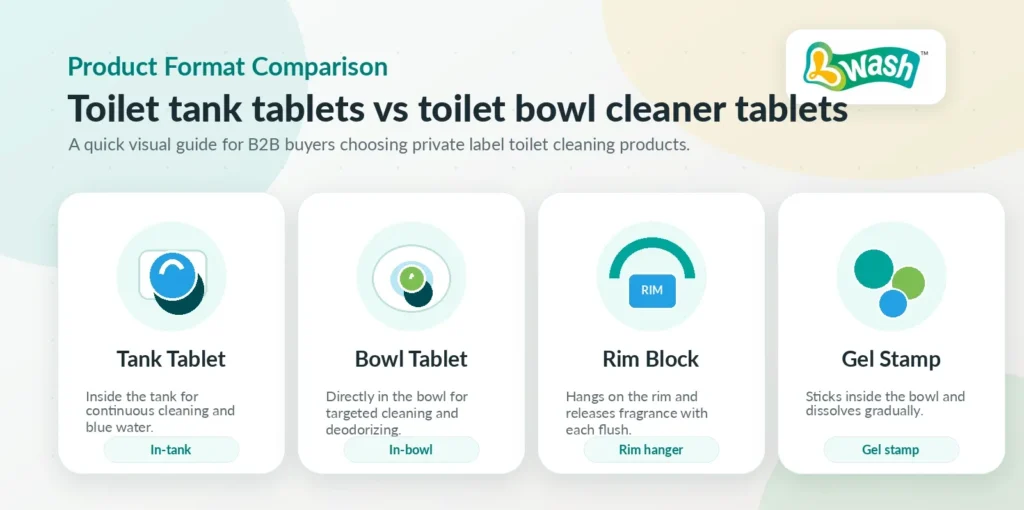
The words are sometimes used together, but the placement can be different.
Toilet tank tablets are placed inside the water tank. They work through repeated flushing. Toilet bowl cleaner tablets may refer to tablets used directly in the bowl, rim, holder, or other bowl-area systems.
For content and product pages, buyers should avoid mixing these terms too casually. A customer who wants a tank tablet may care about water color, flush-by-flush use, scent, and tank compatibility. A customer who wants a bowl tablet may care more about direct bowl cleaning, fizzing, stain removal, or manual cleaning support.
When writing product pages, make the placement clear:
- in-tank tablet
- in-bowl tablet
- rim block
- gel stamp
- hanging cleaner
- manual toilet cleaning tablet
Clear wording reduces complaints and helps buyers choose the right product format.
Because many shoppers and buyers use these terms in different ways, it is worth explaining the difference directly instead of treating all toilet tablets as the same product.
What B2B Buyers Should Check Before Sourcing Toilet Tank Tablets
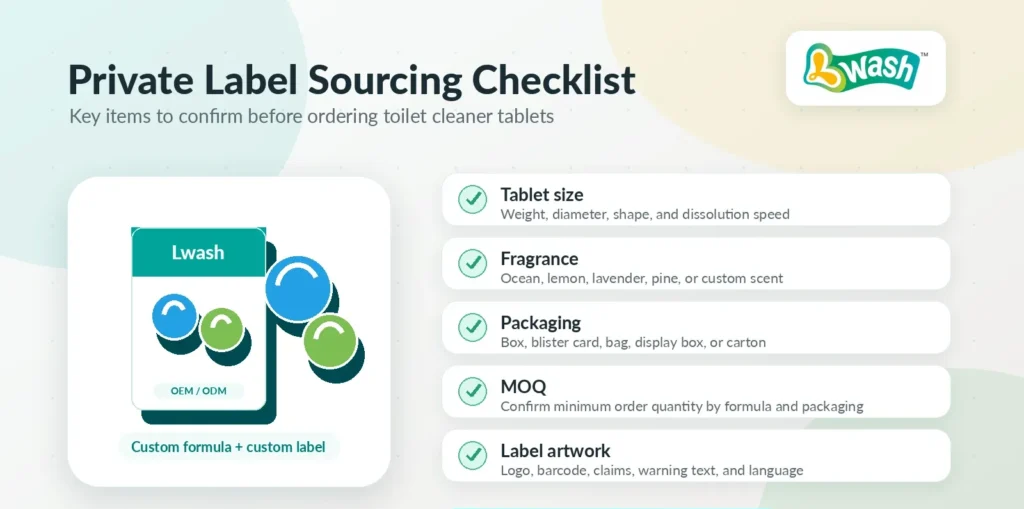
Toilet tank tablets are easy to understand, but they are not all the same. Before requesting samples, buyers should compare several practical details.
From a manufacturer’s point of view, the first decision is usually not the logo design. It is the tablet format. As a reference, Lwash’s current standard starting point for private label toilet tank tablets is a 50g round tablet, about 4.5cm in diameter and 1.8cm high. This format works well for retail blister cards because it is easy to explain, photograph, and pack into 1-piece, 2-piece, 3-piece, 4-piece, or 6-piece cards.
For buyers building a different price point, product size, or use cycle, we can also discuss 40g, 48g, 60g, 70g, and 100g options. Here is the configuration range we usually confirm before sampling:
| Item | Common Option |
|---|---|
| Regular tablet weight | 50g |
| Custom weight options | 40g / 48g / 50g / 60g / 70g / 100g |
| Round tablet size | About 4.5cm diameter x 1.8cm height for 50g |
| Square tablet size | About 3cm x 3cm x 3cm |
| Color options | Blue; two-color half blue and half white |
| Fragrance | Scented or unscented; fragrance can be customized |
| Common pack counts | 1 / 2 / 3 / 4 / 6 tablets per blister card |
| MOQ | 5,000 cards |
| Expected use cycle | Around 2-4 weeks, depending on flushing frequency and conditions |
| Shelf life | 3 years |
1. Product Positioning
Decide whether the product is mainly positioned around:
- visible blue water
- fragrance and freshness
- daily bathroom maintenance
- convenience
- retail display
- private label product line extension
Avoid presenting the product as a full replacement for deep toilet cleaning, plumbing checks, or professional maintenance.
This is also how major consumer brands frame the category. For example, Clorox explains automatic toilet cleaning tablets as a way to help keep the toilet bowl clean and fresh between deeper cleanings, not as a reason to remove regular cleaning from the routine.
2. Product Form and Dissolving Behavior
In the current Lwash range, the most common format is the 50g round tablet. Square tablets around 3cm x 3cm x 3cm are also available when the buyer wants a different visual style or packaging layout. These details matter because tablet size affects blister design, carton planning, product photos, and customer expectations.
In normal sourcing discussions, buyers often plan around an expected use cycle of about 2-4 weeks. This should be treated as a test target, not a blanket promise. Flush frequency, water volume, water hardness, toilet tank design, tablet weight, and fragrance formula can all change how the tablet behaves in real use.
Before printing a duration claim on packaging, we recommend testing samples under the target market’s likely water and flushing conditions. That is especially important for e-commerce listings, because customer complaints often come from unclear expectations rather than the tablet shape itself.
Useful questions include:
- What is the tablet size and weight?
- How is the tablet wrapped or protected?
- Does it dissolve evenly?
- How long is the expected use cycle under normal flushing frequency?
- Does the color release remain stable during use?
- How should the tablet be stored before sale?
If your channel is e-commerce, storage and shipping stability matter as much as the product effect.
3. Fragrance and Color Options
Many customers notice color and scent before they understand ingredients.
For retail and online sales, buyers may want several options, such as ocean, lavender, lemon, pine, or custom fragrance directions. However, scent should be chosen for the target market. A strong fragrance is not always better, especially for small bathrooms, apartments, hotels, and shared spaces.
For product pages, describe scent direction in simple language. Do not promise that fragrance alone solves all odor problems.
For color, many overseas buyers choose a blue tablet or a two-color tablet, such as half blue and half white. Fragrance can be customized, and both scented and unscented options can be discussed. In our experience, overseas retail and private label buyers usually prefer scented versions because fragrance is easier for end users to notice.
3.1 Without Bleach, Hard Water, and Scented Options
Many customers also ask for toilet tank tablets without bleach, toilet tank tablets for hard water, scented toilet tank tablets, and natural toilet tank tablets.
These are useful content angles, but the wording must stay careful.
For example, a product page can explain whether a tablet is bleach-based or non-bleach-based if the product information supports it. It can also explain fragrance direction, visible color, and intended use. But it should not promise that a tablet solves every hard water problem, removes all limescale, or is “natural,” “non-toxic,” or “eco-friendly” unless the claim has suitable evidence for the target market.
4. Packaging and Instructions
Private label toilet tank tablets need clear packaging and usage directions.
For standard private label projects, blister card packaging is commonly used. A single card can be planned as 1 piece, 2 pieces, 3 pieces, 4 pieces, or 6 pieces, depending on the target retail price and channel. For this Lwash product line, the starting MOQ is 5,000 cards.
Buyers should prepare:
- target market
- sales channel
- tablet count per pack
- unit weight
- inner wrapping style
- carton quantity
- label language
- warning text requirements
- usage instructions
- barcode or retail display needs
- brand design direction
- desired card count, such as 1/2/3/4/6 pieces
- expected MOQ and reorder plan
Clear instructions can reduce misuse, returns, and negative reviews.
5. Usage Boundaries and Claim Wording
This is one of the most important parts of toilet tank tablet sourcing.
Some toilet and toilet-parts brands warn that certain in-tank cleaners may affect tank components over time. Kohler’s troubleshooting guidance, for example, notes that flapper or canister seals may wear due to water conditions or in-tank cleaners. Because of this, buyers should be careful with broad claims such as “safe for all toilets,” “safe for all pipes,” “non-toxic,” “eco-friendly,” “septic safe,” “disinfect,” “kill bacteria,” or “antibacterial” unless the product has suitable evidence and the claim fits the target market.
Safer wording is usually more specific:
- designed for regular toilet freshness
- helps maintain a cleaner-looking bowl between regular cleaning
- provides visible blue water with each flush
- available for private label packaging
- usage instructions should be followed as labeled
If you need stronger claims, confirm supporting documents before using them on packaging, websites, ads, or marketplace listings.
For U.S.-facing product pages or packaging, broad environmental wording should also be reviewed carefully. The FTC Green Guides summary is a useful reference for avoiding vague green claims, and EPA Safer Choice can help buyers understand how safer-chemistry claims are usually supported.
Private Label Toilet Tank Tablets: What to Prepare Before Sampling
Before contacting a toilet cleaner tablets manufacturer, prepare a short sourcing brief.
A useful brief can include:
- product type: toilet tank tablets / toilet blue blocks / toilet bowl cleaner tablets
- target country or region
- target sales channel
- expected tablet size and pack count
- fragrance and color preference
- private label packaging needs
- label language
- expected order quantity
- target launch date
- packaging reference images
- claim wording requirements
- any market-specific compliance requirements
- expected MOQ, if you already have a launch plan
Example message:
“We are looking for private label toilet tank tablets for retail and e-commerce sales. We are interested in 50g tablets, scented options, blue or two-color tablets, and blister card packaging. Please share available tablet sizes, 1/2/3/4/6-piece pack options, MOQ, sample cost, production lead time, and label customization support. We also need clear usage instructions and suitable claim wording for our target market.”
This type of message helps the supplier respond with useful details instead of only sending a price list.
Lwash reference specification: the regular starting MOQ is 5,000 cards, and the usual shelf life is 3 years. Available project discussions can include standard 50g tablets, custom weight options, blue or two-color tablets, scented or unscented choices, fragrance customization, and blister-card pack counts.
If buyers need stronger market claims such as bleach-free, hard-water performance, eco-friendly, non-toxic, or septic-safe wording, treat those as packaging and compliance decisions that should be confirmed before final artwork.
How to Compare Toilet Cleaner Tablets Manufacturers
When comparing suppliers, do not only look at the lowest unit price.
Use this checklist:
- Does the supplier produce toilet cleaner tablets in-house?
- Can they explain the difference between tank tablets, bowl tablets, rim blocks, and blue blocks?
- Are tablet size, weight, and packaging options clear?
- Can they support fragrance and color options?
- Is the MOQ suitable for your launch plan?
- Is private label packaging available?
- Can they support the pack count you need, such as 1, 2, 3, 4, or 6 tablets per card?
- Is the shelf life suitable for your channel and inventory plan?
- Are usage instructions clear?
- Are claim boundaries explained professionally?
- Can the supplier provide samples before bulk order?
- Is the production lead time realistic?
- Can they support repeat orders with stable packaging?
For B2B buyers, repeat stability is usually more important than one attractive sample.
A Practical Sample Test Before Final Packaging Claims
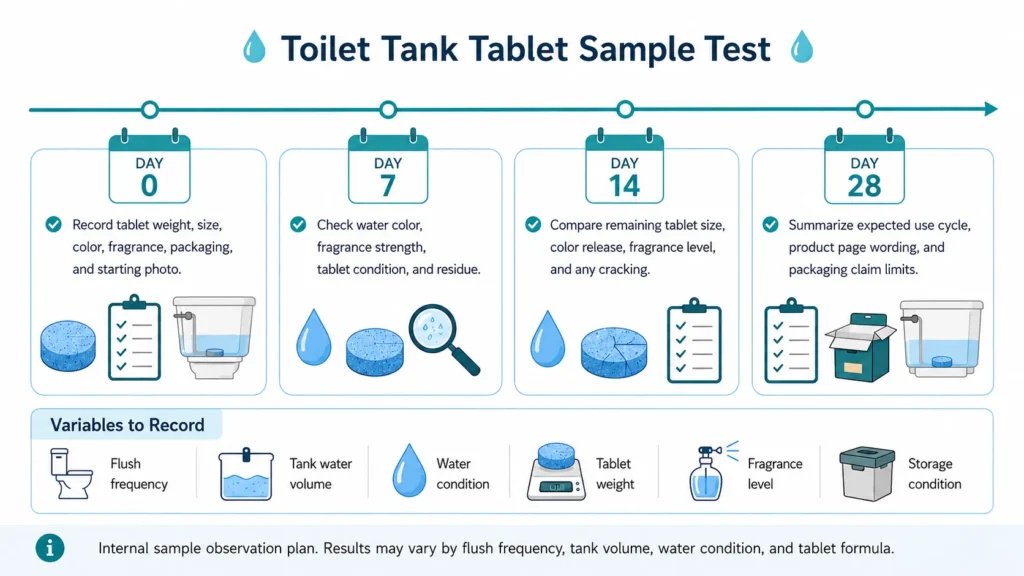
Before printing claims such as “lasts 4 weeks,” “for hard water,” “bleach-free,” or “safe for septic systems,” buyers should test the final sample under conditions that are close to the target market.
A useful sample test can record:
- tablet weight and shape
- tank water volume
- flush frequency per day
- local water hardness, if hard-water claims are planned
- number of days until visible color fades
- fragrance strength during the use cycle
- whether the tablet breaks evenly or leaves heavy residue
- storage condition before use
- packaging condition after shipping simulation or carton storage
- photos on day 1, day 7, day 14, and day 28
This type of simple record helps buyers write more realistic product pages and packaging instructions. It also helps suppliers adjust tablet weight, wrapping, fragrance level, or pack count before the order moves into final artwork.
Popular Search Questions Buyers Should Cover
Common customer questions show that users do not only ask what toilet tank tablets are. They also ask whether they should use them, how to use them, what to avoid, whether bleach tablets may cause problems, and whether a dishwasher tablet can be used in a toilet tank.
These questions are useful for B2B buyers because they can become product page FAQ, package instructions, marketplace listing content, and customer service scripts.
Important questions to cover include:
- Should you use toilet tank tablets?
- How do you use a toilet tank tablet?
- What is the best thing to put in a toilet tank to keep it clean?
- Do toilet tank tablets cause problems?
- What is a good alternative to bleach tablets in the toilet tank?
- Can you put a dishwasher tablet in a toilet tank?
- How long do toilet tank tablets last?
The answers should be practical, not exaggerated. Good product content helps customers understand proper use and helps buyers reduce complaints.
Conclusion
Toilet tank tablets are simple products on the surface, but B2B buyers should evaluate them through product form, fragrance, color, packaging, usage instructions, claim wording, private label support, and repeat supply stability.
For B2B product education, this topic is useful because it connects real user questions with a clear product line. A strong product page or blog article should answer consumer-style questions honestly, then guide serious buyers toward a practical sourcing checklist.
For buyers preparing a private label project, the most useful next step is a clear brief: target market, sales channel, tablet size, pack count, fragrance direction, label language, claim requirements, and expected launch quantity. With those details, a supplier can respond with samples, packaging options, MOQ, lead time, and realistic claim guidance instead of only sending a price list.
FAQ
What are toilet tank tablets?
Toilet tank tablets are solid toilet cleaner tablets placed in the toilet tank. They slowly dissolve in tank water and release color, fragrance, or cleaning ingredients into the flush water.
Should you use toilet tank tablets?
You can use toilet tank tablets when the product instructions match your toilet and the goal is regular freshness, visible blue water, or convenience between deeper cleaning routines. They should not be used as a replacement for manual cleaning, plumbing checks, or toilet part maintenance.
Are toilet tank tablets the same as toilet bowl cleaner tablets?
Not always. Toilet tank tablets are placed in the tank, while toilet bowl cleaner tablets may refer to products used directly in the bowl, rim, holder, or another bowl-area format. Product pages should clearly explain the placement.
How do you use a toilet tank tablet?
Follow the product label. In general, a tank tablet is placed in the toilet tank, away from direct contact with sensitive mechanisms when the product instructions require it. Users should wash hands after handling and should not mix it with other cleaners.
Can I put a dishwasher tablet in my toilet tank?
No. A dishwasher tablet is designed for dishwashers, not toilet tanks. It may create unexpected residue, foam, fragrance, or compatibility issues. Use products designed and labeled for toilet use.
Do toilet tank tablets cause problems?
Some in-tank cleaners may affect toilet tank parts over time depending on formula, contact time, toilet design, and usage conditions. Product pages should avoid broad claims such as “safe for all toilets” unless there is suitable evidence.
How long do toilet tank tablets last?
The use time depends on tablet size, formula, water volume, flush frequency, storage condition, and toilet design. For many private label toilet cleaner tablet projects, buyers discuss an expected use cycle of around 2-4 weeks, but this should be tested under realistic flushing conditions before finalizing packaging claims.
What tablet sizes, colors, and fragrances are available?
A common private label specification is a 50g round tablet, about 4.5cm in diameter and 1.8cm high. Square tablets around 3cm x 3cm x 3cm are also available. Custom weights such as 40g, 48g, 60g, 70g, and 100g can be discussed. Common color options include blue tablets and half-blue, half-white two-color tablets. Fragrance can be customized, and both scented and unscented versions can be discussed.
What is the MOQ for private label toilet cleaner tablets?
For this Lwash product line, the regular starting MOQ is 5,000 cards. Pack counts can be planned as 1, 2, 3, 4, or 6 tablets per blister card depending on the target channel and price point. The usual shelf life is 3 years, which helps buyers plan inventory and repeat orders.
What should buyers check before sourcing toilet tank tablets?
Buyers should check tablet size, dissolving behavior, fragrance, color, packaging, MOQ, private label support, usage instructions, claim wording, sample process, lead time, shelf life, and repeat order stability. For claims such as bleach-free, hard-water performance, eco-friendly, non-toxic, or septic-safe, confirm the formula and supporting documents before printing them on packaging.