
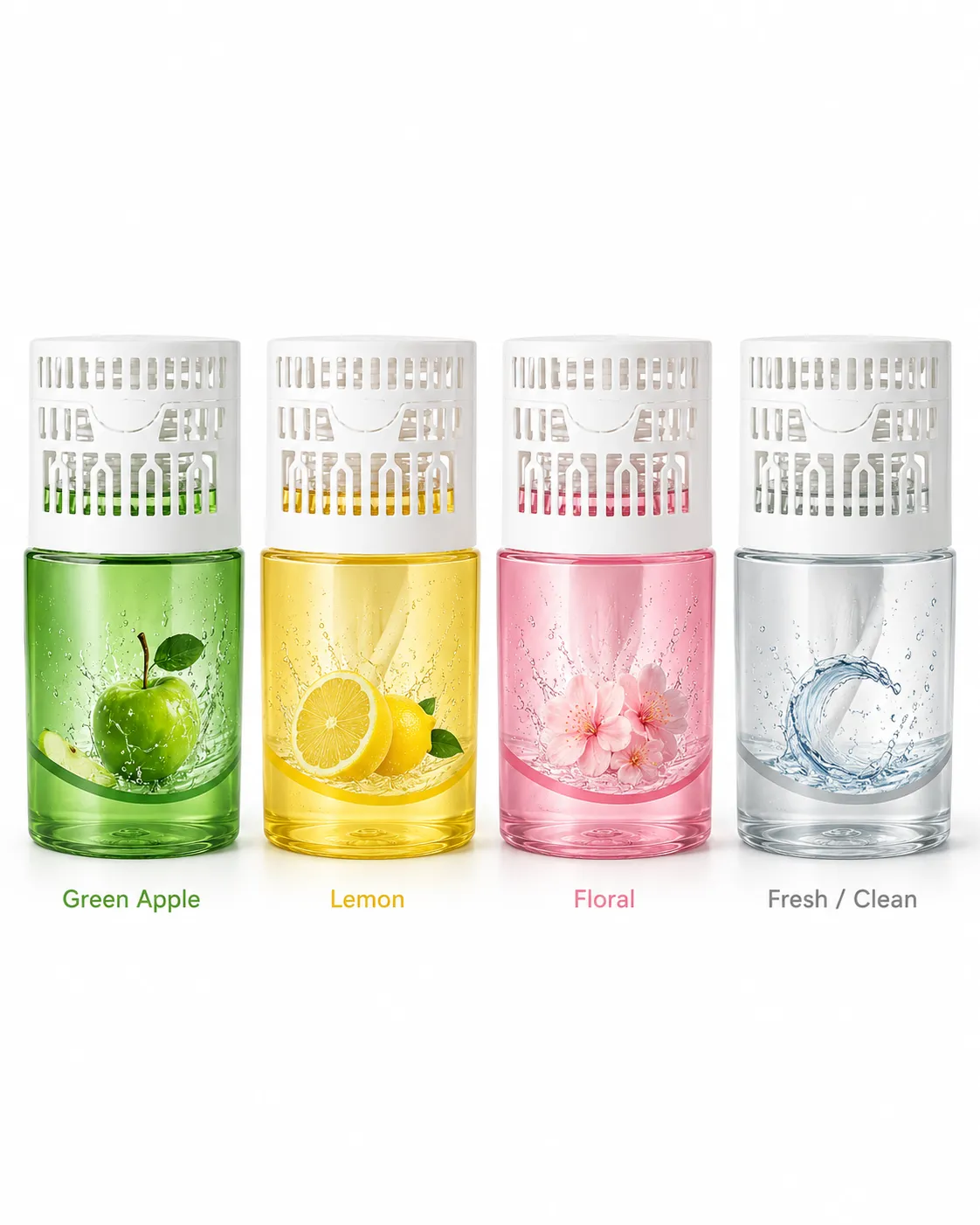
A gel air freshener is a passive home-fragrance format that releases scent gradually from a gel or fragrance-release core. It is commonly used in small spaces such as bathrooms, bedrooms, closets, and offices—provided the finished product label approves that placement.
This FAQ answers the questions people ask most often: what a gel air freshener does, how to use it, how long it may last, and what to check before choosing or sourcing one. Exact use directions, fragrance duration, ingredients, and warnings always depend on the finished formula and container.
Quick Answers About Gel Air Fresheners
| Question | Short answer |
|---|---|
| Do gel air fresheners work? | They can gradually release fragrance into a small space. They do not replace cleaning, ventilation, or fixing the source of a persistent odor. |
| How do you use a gel air freshener? | Open and position it exactly as the finished label directs. Keep the container upright on a stable surface unless the label approves another orientation. |
| How long does a gel air freshener last? | It depends on the formula, net weight, vent opening, airflow, temperature, and room conditions. Use a specific duration only when it is supported by the finished product’s label or testing. |
| Are gel air fresheners safe? | There is no universal yes-or-no answer. Follow the finished label, keep the product out of reach of children, and do not ingest it. |
| Can a gel air freshener remove an odor source? | No. Fragrance may improve the scent experience, but a recurring odor still needs its underlying source identified and addressed. |
In this guide
- What a gel air freshener is
- How gel air fresheners work
- How to use one
- How long it lasts
- Where to place it
- Fragrance versus odor-source control
- Safety and label questions
- What private-label buyers should confirm
- More FAQs
What Is a Gel Air Freshener?
Short answer: A gel air freshener is a container-format air-care product designed to provide fragrance in a room or other approved small space.
Unlike a spray that delivers fragrance in a single burst, a gel format is intended to release fragrance gradually after the product is opened or vented. The exact construction can vary: a finished product may use a solid gel, a softer gel, or an absorbent fragrance-release core. For that reason, the package directions—not the word “gel” alone—should define how the product is opened, placed, and stored.
LWASH gel air freshener programs are designed for home-fragrance and small-space air-care ranges, with final fragrance, content color, container, cap, label, and packaging confirmed for each project.
How Do Gel Air Fresheners Work?
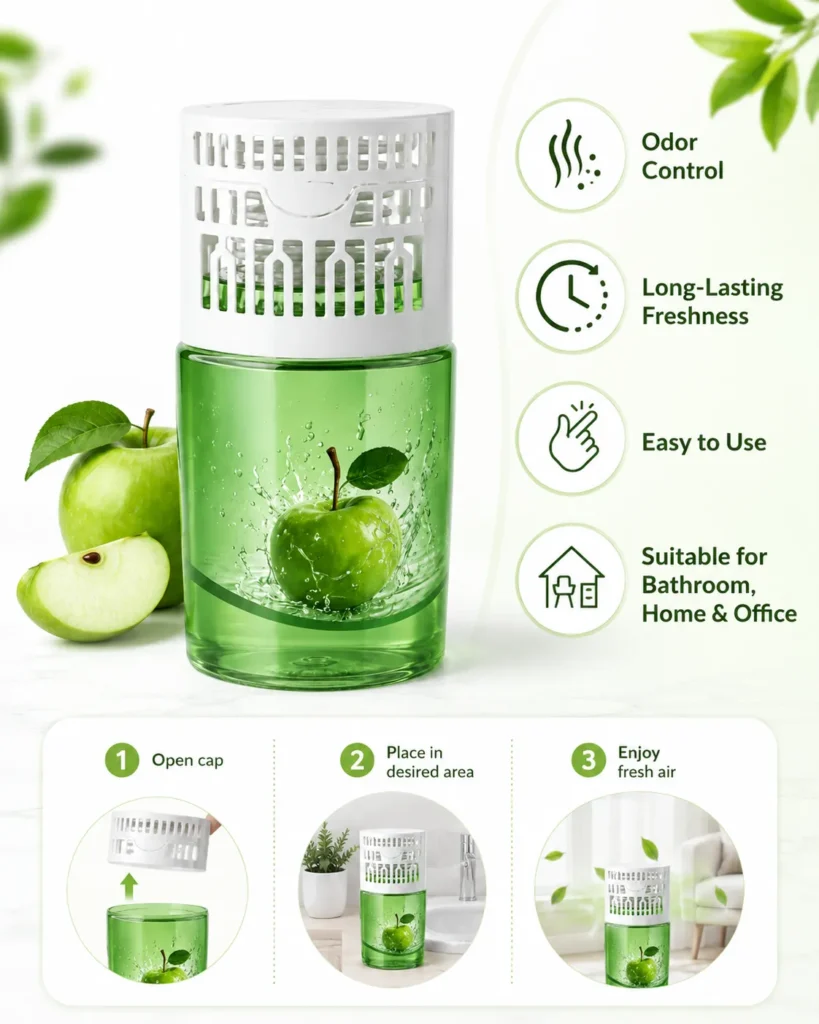
Short answer: They work by allowing fragrance to evaporate gradually into the surrounding air after the product is opened or exposed through its designed venting system.
Poison Control describes gel-type air-freshener formats as allowing slow evaporation that prolongs the presence of fragrance. The rate will differ from one product to another, especially when the container, opening, formula, room temperature, and airflow differ. Its air-freshener safety guidance also makes clear why a final product label matters: formulations and product formats are not interchangeable.
In practical terms, a gel air freshener is best understood as a fragrance product. It may make a small space smell more pleasant, but it is not automatically an air purifier, a disinfectant, or a solution for every kind of odor.
How Do You Use a Gel Air Freshener?
Short answer: Follow the finished product’s opening and ventilation instructions, then keep the container upright on a stable surface in an approved location.
- Read the finished label before opening. It should state the intended room types, opening method, warnings, and storage conditions for that exact product.
- Open only as directed. Do not cut, puncture, remove an inner seal, or change a vented lid unless the directions tell you to do so.
- Place it upright and securely. Choose a level surface where it cannot be knocked over, exposed to food-contact surfaces, or accessed by children.
- Use it only in the approved setting. A container designed for a bathroom shelf or closet is not automatically approved for a vehicle, a hot windowsill, or every enclosed space.
- Replace it according to the label. Do not assume that a container can be refilled or that a different brand’s refill is compatible.
Do not improvise product instructions. A DIY recipe, another brand’s opening method, or a product page for a spray, plug-in, or reed diffuser is not a substitute for the label on a gel air freshener.
How Long Does a Gel Air Freshener Last?
Short answer: Duration is product-specific. Formula, net weight, container design, vent opening, temperature, airflow, and room conditions can all change how quickly fragrance is released.
For this reason, a buyer or brand should not borrow a “lasts X days” claim from a competing gel, a plug-in, or an aerosol. The current LWASH product information likewise treats usage duration as a finished-product item to confirm before publication and production. A reliable retail label should state the approved duration only after it has been validated for the selected formula and pack.
A stronger scent is not necessarily evidence of a longer-lasting product. It may simply reflect a larger opening, a different formula, higher temperature, or more airflow in the room.
Where Should You Put a Gel Air Freshener?
Short answer: Use it only in the locations listed on the finished label, usually on a stable upright surface in an approved small space.
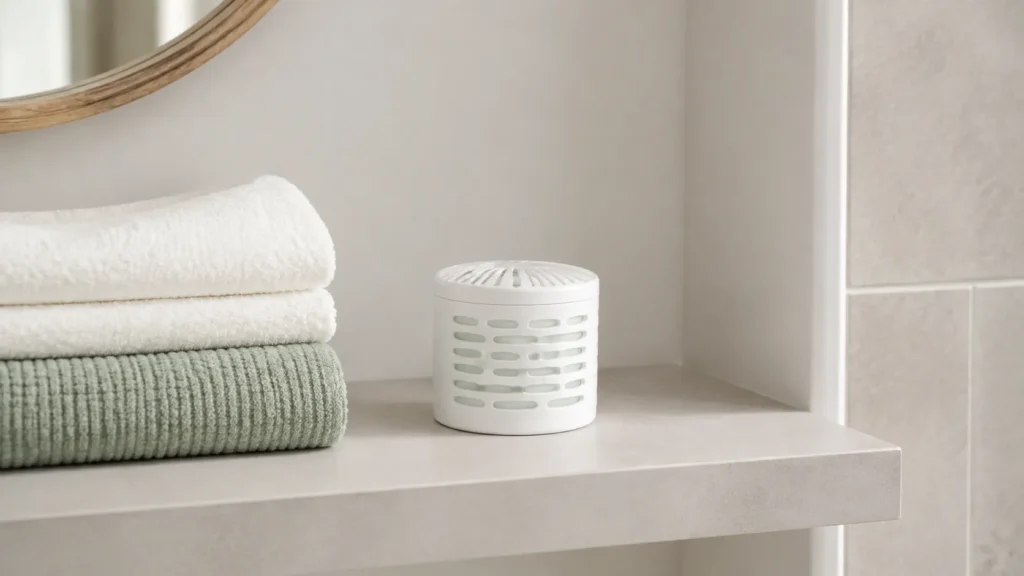
For a home-fragrance range, common approved placements may include bathrooms, bedrooms, closets, and offices. Placement should suit the final container and label, not a generic air-freshener assumption. Keep the product away from food-preparation areas, direct heat, and any location where it can be tipped, swallowed, or handled by a child.
Vehicle use deserves a separate decision. Heat stability, securing the container, and vehicle-specific label directions should all be confirmed before a gel air freshener is positioned or marketed for a car.
Can a Gel Air Freshener Solve a Persistent Odor?
Short answer: No. It can add fragrance to a room, but a recurring odor still needs its source identified and addressed.
If a bathroom, closet, kitchen, or office has a persistent smell, check for the underlying cause first: damp materials, a bin that needs cleaning, food residue, ventilation problems, or another maintenance issue. The U.S. Environmental Protection Agency identifies source control and improved ventilation as core ways to improve indoor air quality; fragrance should not be presented as a replacement for either. Read the EPA’s indoor-air-quality guidance.
That distinction also makes a better product claim. “Home fragrance” or “small-space air care” describes a gel air freshener’s role more accurately than a broad promise to fix every odor problem.
Are Gel Air Fresheners Safe?
Short answer: Safety depends on the finished formulation, container, use conditions, and label directions. Do not make a universal safety claim for every gel air freshener.
Use the exact product only as directed, keep it out of reach of children, and do not ingest it. Poison Control notes that the potential effects of air fresheners vary by formulation and that swallowing gel-type evaporative products can be serious. If there is an exposure concern in the United States, use the Poison Control guidance or contact a local poison center.
People can also respond differently to fragranced products. The American Lung Association’s fragrance guidance notes that some people, including those with asthma, allergies, or chemical sensitivities, may be more affected by fragrance exposure. A responsible label should include the finished product’s required warnings, first-aid information, storage directions, and market-specific disclosures.
What Should Buyers Confirm Before Sourcing a Private-Label Gel Air Freshener?
Short answer: Confirm the finished formula, fragrance direction, pack format, label, warnings, and evidence behind every performance statement before approving packaging.
- Product format: Confirm whether the selected item is a solid gel, soft gel, or an absorbent-core format; do not use a description that the finished product cannot support.
- Fragrance and user experience: Confirm scent direction, color, net weight, container, cap, and vent opening with physical samples.
- Use directions: Approve where the product can be placed, how it is opened, whether it must remain upright, and its validated usage duration.
- Claims and safety: Review every deodorizing, odor-elimination, “non-toxic,” pet-related, or duration statement against the final formula, testing, and target-market requirements.
- Packaging and documentation: Confirm label language, warning content, first-aid information, barcode, carton marks, shelf-life requirements, and any SDS/MSDS or other documents required for the market.
For an OEM or private-label project, begin with the target market, desired fragrance, pack format, expected quantity, and packaging reference. Contact LWASH about a gel air freshener project to confirm the product details that apply to your final configuration.
More Gel Air Freshener FAQs
Are gel air fresheners and solid air fresheners the same?
Not necessarily. They can have a similar room-fragrance purpose, but the formula, internal structure, container, opening method, and label directions may be different. Use the specific product description and finished label rather than treating the terms as interchangeable.
Can I use a gel air freshener in a bathroom or closet?
Only if the finished label approves that setting. Bathrooms and closets are common small-space applications, but the final product’s container, ventilation, and safety directions still control where it may be used.
Can I use a gel air freshener in my car?
Only when the final product is approved and labeled for vehicle conditions. A home container may not be appropriate for heat exposure, movement, or the placement options inside a car.
Can I refill a gel air freshener container?
Do not refill it unless the finished product is specifically designed and labeled as refillable. A refill has to match the intended container, formula, closure, and safety information.
When should I replace a gel air freshener?
Follow the finished label’s replacement guidance. Do not base replacement only on a competing brand’s stated duration, and do not add more fragrance material to a container that was not designed for it.
Does a gel air freshener eliminate odors?
Only use an odor-elimination claim when the finished product has appropriate supporting evidence and the claim is approved for the target market. Without that support, describe the product as home fragrance or air care and address recurring odor sources separately.
Planning a private-label air-care range? Explore the LWASH gel air freshener product format and confirm fragrance, container, label, and documentation requirements before sampling.