
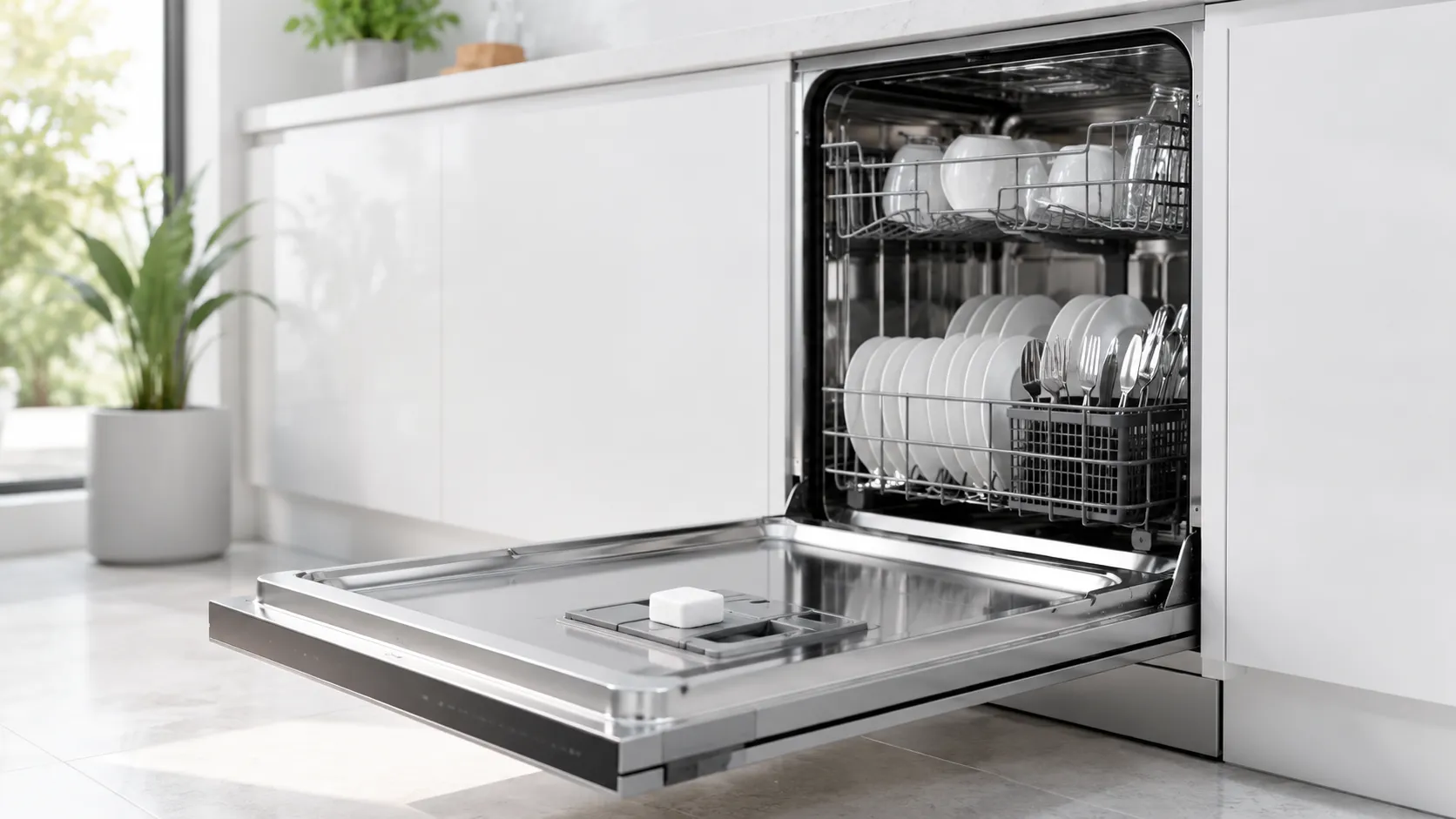
Can you use dishwasher pods in a Samsung dishwasher? Yes, in many cases you can, as long as the pod is made for automatic dishwashers and is placed according to the dishwasher and detergent instructions.
For Samsung dishwashers, the key point is placement. Samsung’s detergent guidance says detergent should be used in the detergent compartment for wash cycles except Rinse Only, and dishwasher detergent should be made for dishwashers, not hand dishwashing. For pods or tablets, Samsung also says the pod or tablet should be placed properly in the dispenser and the dispenser door should be closed.
This guide explains where to put dishwasher pods, why a pod may not dissolve, when a different detergent format may work better, and what private label buyers should check before sourcing dishwasher pods or tablets.
Where Should You Put Dishwasher Pods in a Samsung Dishwasher?
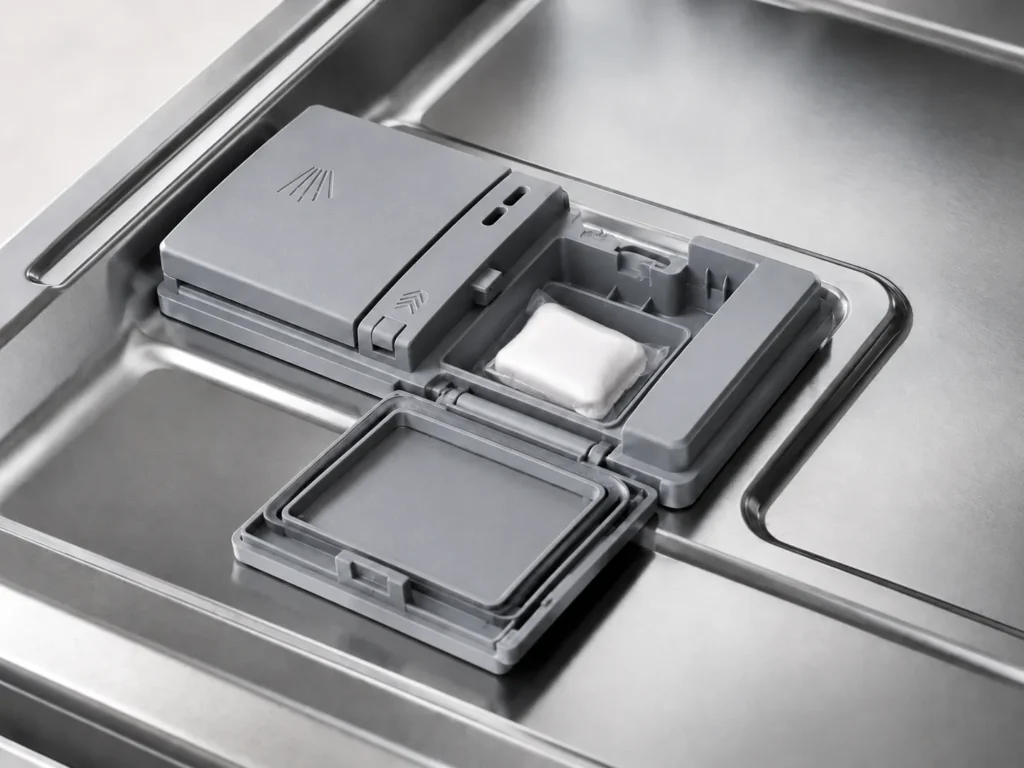
In most cases, place the dishwasher pod in the detergent dispenser on the dishwasher door, then close the dispenser door securely.
This matters because the dispenser is designed to release detergent at the right point in the wash cycle. If a pod is placed loose at the bottom of the machine, it may dissolve too early, especially during pre-wash or rinse movement, and the main wash may not get the intended detergent release.
Many users search for this question in different ways: where to put dishwasher pods, where do dishwasher pods go, how to use dishwasher pods, or which dishwasher compartment should hold detergent. These all point to the same practical issue: the detergent should be held until the dishwasher reaches the correct part of the cycle.
Samsung’s guidance for pods and tablets is practical:
- place the pod or tablet properly in the dispenser
- close the dispenser door correctly
- use a pod that fits the dispenser
- use a different pod brand or liquid dishwasher detergent if the pod does not fit
- make sure the water supply is hot enough for the pod or tablet to dissolve
Users should still check the manual for their specific Samsung dishwasher model, because dispenser shape and cycle design can vary.
Can You Put a Dishwasher Pod at the Bottom of the Dishwasher?
For a Samsung dishwasher, the safer general answer is: use the detergent dispenser unless the dishwasher manual or detergent label gives a different instruction.
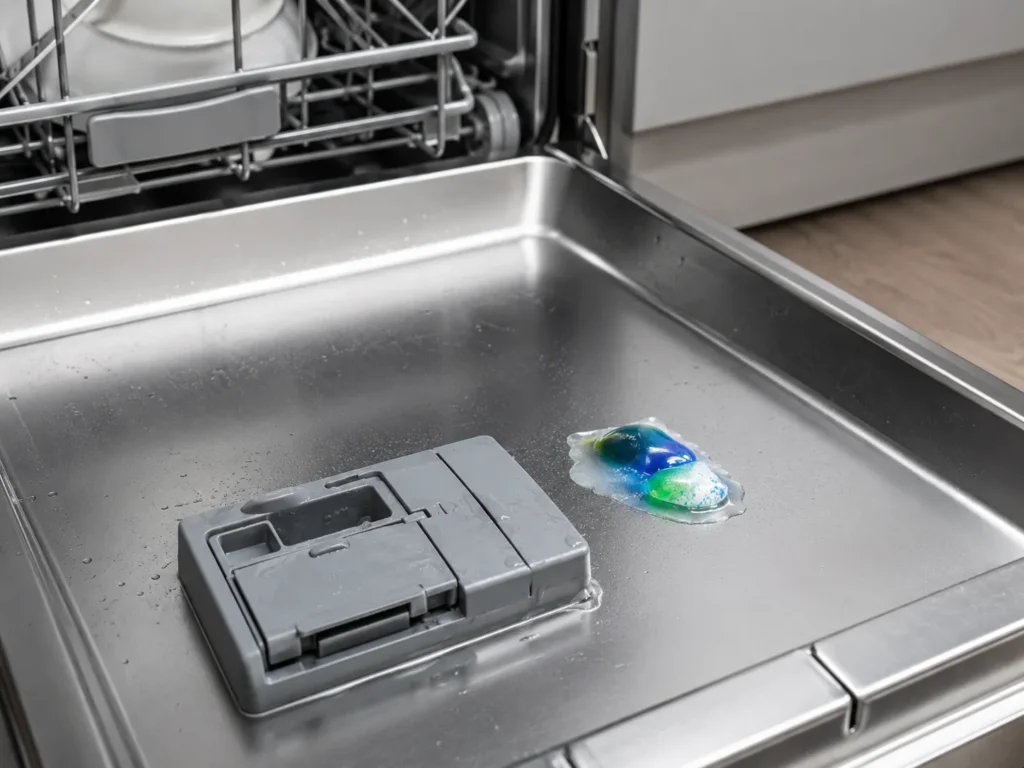
Putting a pod at the bottom may seem convenient, but it can change when the detergent dissolves. In many dishwasher cycles, water enters and drains before the main wash. If the pod dissolves during an early phase, less detergent may remain for the part of the cycle where it is most needed.
There may be online advice suggesting other placements, but product pages and customer support content should be careful. A better message is:
Follow the dishwasher manual and detergent label. For Samsung dishwasher pods or tablets, place the product in the detergent dispenser when the instructions require it.
This is also useful for private label brands. Clear placement instructions reduce avoidable complaints such as residue, poor cleaning, or pods left partly dissolved.
Why Is My Dishwasher Pod Not Dissolving?
A dishwasher pod may not dissolve fully because of water temperature, dispenser blockage, loading problems, pod size, storage condition, cycle selection, or machine maintenance.
Common causes include:
| Possible cause | What happens | What users should check |
|---|---|---|
| Water is too cool | The film or tablet does not dissolve completely | Samsung notes pods or tablets need hot water, with water supply at least 120°F unless the detergent manufacturer requires hotter water |
| Pod does not fit the dispenser | The dispenser door may not close or open properly | Try a different pod size or use liquid dishwasher detergent if needed |
| Dispenser is wet or has residue | Pod may stick or detergent may not release properly | Keep the dispenser clean and dry before loading detergent |
| Dishes block the dispenser | The dispenser door may not open fully | Load dishes so they do not block the dispenser or spray arms |
| Spray arms are blocked | Water may not reach the dispenser area properly | Check that spray arms rotate freely and nozzles are not clogged |
| Pod is old or damp | Film may stick, soften, or clump | Store pods in a cool, dry container and close the package after use |
| Wrong cycle or short cycle | Not enough time or heat for full dissolving | Use a cycle suitable for the load and detergent format |
If the dispenser still does not open or detergent still remains after these checks, the dishwasher may need maintenance or service rather than a different detergent.
What Water Temperature Do Dishwasher Pods Need?
Samsung’s U.S. support guidance says detergent pods require hot water to dissolve completely, and the water supply must be at least 120°F. If the detergent manufacturer requires a higher temperature, users should follow that requirement.
For product education, this is an important point. A pod is not only a detergent formula; it is also a physical format. The film, tablet body, and detergent ingredients all need suitable contact with hot water and spray action.
Private label product pages should avoid promising that every pod dissolves perfectly in every dishwasher. A more realistic claim is that the product should be used according to the final label, with suitable water temperature, dry storage, correct placement, and a compatible dishwasher cycle.
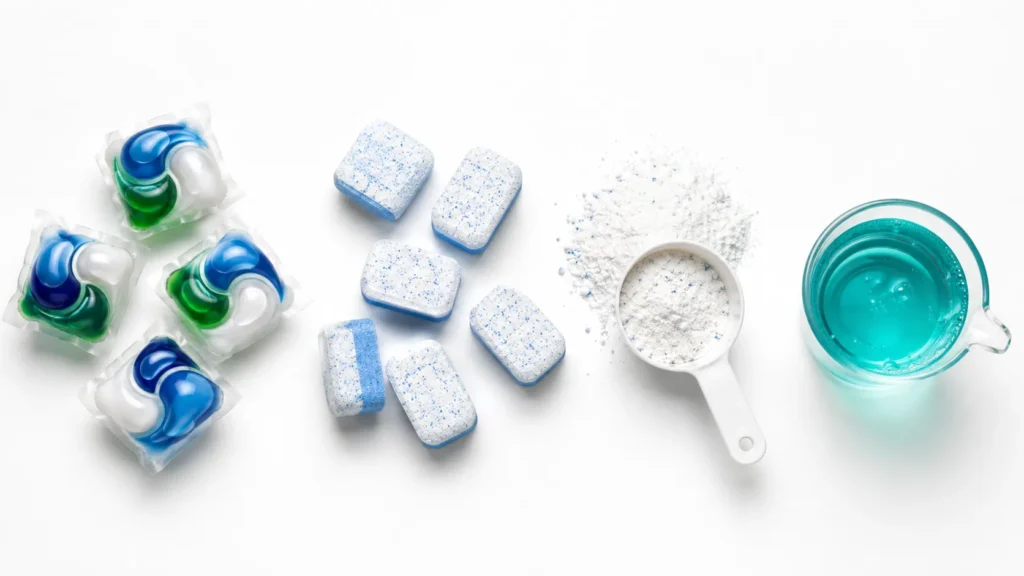
Dishwasher Pods vs Tablets vs Powder vs Liquid
Dishwasher pods, tablets, powder, and liquid detergents can all be used in automatic dishwasher products, but they fit different customer expectations.
| Format | Main advantage | What to explain on product pages |
|---|---|---|
| Pods / packs | Pre-measured and convenient | Placement, storage, film stability, pack count, moisture protection |
| Tablets | Compact and easy to count | Tablet size, dissolving behavior, water temperature, dispenser fit |
| Powder | Flexible dosage | Measuring amount, storage, moisture control, user instructions |
| Liquid / gel | Easier fit for some dispensers | Dosage, bottle sealing, leakage control, shipping considerations |
For consumers, the question is usually simple: which format is easiest and works in their machine?
For B2B buyers, the question is broader. A private label dishwasher detergent product has to match the sales channel, packaging, storage, shipping, user habits, label language, and claim wording.
Common Mistakes When Using Dishwasher Pods
Many pod problems come from usage details rather than the idea of pods itself.
Common mistakes include:
- using hand dish soap instead of automatic dishwasher detergent
- placing the pod loose in the dishwasher when the manual requires the dispenser
- touching pods with wet hands
- storing pods in humid conditions
- overloading the dishwasher so water cannot move freely
- blocking the dispenser door with large dishes or utensils
- using a pod that is too large for the dispenser
- choosing a short or low-temperature cycle when the detergent needs more heat
- assuming one pod format fits every dishwasher model
These details are useful for brands and sellers because they can become product page FAQ, package instructions, customer service scripts, and short social media posts.
For Private Label Buyers: What to Check Before Sourcing Dishwasher Pods
For private label buyers, dishwasher pods are not only a detergent format. They are a combined product of formula, film, dosing, packaging, storage, instructions, and claims.
Before ordering samples, buyers should confirm:
- intended market and sales channel
- pod size and whether it fits common detergent dispensers
- detergent dose per pod
- water-soluble film stability
- storage and humidity requirements
- pouch, tub, box, or bag packaging
- pack count and retail price point
- carton quantity and shipping protection
- usage instructions for dispenser placement
- warning text and first-aid language
- claim wording such as grease removal, rinse support, fragrance, enzyme, or all-in-one positioning
- whether rinse aid or salt claims are supported by the final product
- whether product photos and listings clearly show the pod format
If a buyer wants to make statements such as eco-friendly, biodegradable, non-toxic, phosphate-free, chlorine-free, safe for all dishwashers, or kills bacteria, those claims should be checked against the final formula, testing, certifications, and target-market rules before printing packaging or publishing listings.
Lwash can currently use its Dishwasher Cleaning Tablets Manufacturer product page as the main product entry for this topic. For private label dishwasher cleaning tablets, the starting MOQ can be written as 5,000, and private label packaging can be discussed for buyer projects.
For a broader supplier checklist, see the Household Cleaner Manufacturer: Private Label Guide.
What Should a Dishwasher Pod Product Page Explain?
A good dishwasher pod product page should answer the same questions consumers ask before or after use.
Useful sections include:
- what the product is designed for
- whether it is for automatic dishwashers
- where to place the pod
- how many pods to use per cycle
- what to do if a pod does not fit the dispenser
- storage instructions
- water temperature or cycle reminders
- whether rinse aid is separate or included
- what product claims are supported
- which customers or sales channels the packaging fits
For SEO, product pages and support articles should also use the customer’s natural wording. Terms such as where to put dishwasher pods, how to use dishwasher pods, and dishwasher pod not dissolving are clearer than only using internal technical language like “detergent dosing format.”
This type of content does not only help SEO. It can reduce misunderstandings, returns, and customer service pressure.
When Should Users Avoid Dishwasher Pods?
Users should avoid dishwasher pods when the pod does not fit the dispenser, the dishwasher manual does not support that format, the package is damaged or damp, or the product is not labeled for automatic dishwasher use.
Users should also avoid using laundry pods, hand dish soap, general cleaners, or homemade detergent mixtures in a dishwasher. These products are designed for different cleaning systems and may cause foam, residue, poor rinsing, or other issues.
For private label sellers, this is worth saying clearly. Sometimes a careful “do not use” section builds more trust than an exaggerated performance claim.
Conclusion
Dishwasher pods can be used in many Samsung dishwashers when they are made for automatic dishwashers, fit the detergent dispenser, and are used according to the dishwasher and detergent instructions.
The main practical checks are simple: use dishwasher detergent, place the pod correctly, close the dispenser, keep the dispenser clean, avoid blocking spray action, and make sure the water is hot enough for the pod to dissolve.
For private label dishwasher detergent buyers, this topic is also a useful product-development reminder. Pod size, film stability, packaging, moisture protection, label instructions, and realistic claims all affect the customer experience.
If you are sourcing dishwasher detergent products for retail, wholesale, e-commerce, or private label channels, view the Lwash Dishwasher Cleaning Tablets Manufacturer page or contact Lwash to discuss samples, MOQ 5,000, private label packaging, and OEM/ODM support.
FAQ
Can you use dishwasher pods in a Samsung dishwasher?
Yes, many Samsung dishwashers can use dishwasher pods or tablets when they are made for automatic dishwashers and placed properly in the detergent dispenser. Always follow the dishwasher manual and detergent label.
Where do you put a dishwasher pod in a Samsung dishwasher?
In most cases, put the dishwasher pod in the detergent dispenser on the dishwasher door and close the dispenser door securely. Check the manual for the exact model if the dispenser design is different.
Can I put a dishwasher pod at the bottom of a Samsung dishwasher?
Use the detergent dispenser unless the appliance manual or detergent label says otherwise. A loose pod may dissolve too early and reduce cleaning performance during the main wash.
Why is my dishwasher pod not dissolving?
Common reasons include low water temperature, a wet or dirty dispenser, blocked spray arms, poor loading, a pod that does not fit the dispenser, an unsuitable cycle, or pods stored in humid conditions.
What water temperature do dishwasher pods need?
Samsung’s guidance says dishwasher pods need hot water to dissolve completely, with water supply at least 120°F unless the detergent manufacturer requires a higher temperature.
Can I use regular dish soap instead of dishwasher pods?
No. Regular hand dish soap is not designed for automatic dishwashers and may create too much foam. Use detergent intended for automatic dishwashers.
Are dishwasher pods better than tablets or powder?
Pods are convenient and pre-measured, but they are not automatically better for every user or channel. Tablets, powder, and liquid detergents may fit different packaging, dosage, cost, and dispenser needs.
What should private label buyers check before sourcing dishwasher pods?
Buyers should check pod size, dosage, film stability, packaging moisture protection, pack count, label instructions, carton planning, supported claims, sample testing, and whether the product fits the target sales channel.
What is the MOQ for private label dishwasher cleaning tablets?
For Lwash dishwasher cleaning tablets, the starting MOQ can be written as 5,000. Buyers should confirm final packaging format, label artwork, carton details, and sample requirements before bulk order.